

Garden landscaping is more than simply planting flowers or trimming the lawn. It is the process of designing an outdoor space that is both attractive and practical. A well-planned garden combines plants, pathways, trees, lighting, seating areas, and decorative features to create a place where people can relax, entertain guests, and enjoy nature.
Whether you have a large backyard, a small front yard, or a compact patio garden, thoughtful garden landscaping can completely transform the appearance of your home. The best designs balance beauty with functionality, making the space enjoyable throughout the year.
In this guide, you’ll learn how to plan a landscape, choose the right plants, create attractive layouts, and maintain a healthy outdoor space that fits your lifestyle and budget.
What Is Garden Landscaping?
Garden landscaping is the art of improving outdoor spaces by combining natural elements with structural features. Instead of planting randomly, landscaping focuses on creating a balanced design where every feature has a purpose.
A successful landscape may include:
- Flower beds
- Trees and shrubs
- Lawns
- Walkways
- Patios
- Decorative stones
- Water features
- Outdoor lighting
- Seating areas
- Raised garden beds
The goal is to create an outdoor environment that looks attractive while remaining easy to use and maintain.
Why Garden Landscaping Is Important
A thoughtfully designed landscape offers benefits far beyond appearance.
Some of the biggest advantages include:
Improves Curb Appeal
The front garden creates the first impression of your home. Colorful plants, healthy lawns, and neat pathways instantly make a property look more welcoming.
Increases Property Value
Professionally planned landscaping can increase the value of a home because buyers often appreciate attractive outdoor living spaces.
Creates Outdoor Living Space
Modern gardens are designed as extensions of the home. Patios, pergolas, decks, and seating areas provide comfortable spaces for relaxing or entertaining family and friends.
Supports Wildlife
Choosing a variety of flowers, shrubs, and native plants attracts butterflies, bees, birds, and other beneficial wildlife that help maintain a healthy ecosystem.
Reduces Stress
Spending time in a peaceful garden surrounded by greenery has been shown to improve mood and reduce everyday stress.
Planning Your Garden Landscape
Before purchasing plants or decorative materials, spend time planning your landscape carefully.
Good planning helps avoid costly mistakes and creates a more balanced design.
Consider the following questions:
- How much sunlight does the area receive?
- What type of soil do you have?
- How much maintenance are you willing to do?
- Do you want space for children or pets?
- Will you grow flowers, vegetables, or both?
- What is your budget?
Sketching a simple layout before planting often makes the entire project easier.
Popular Garden Landscaping Styles
Every homeowner has a different vision for their outdoor space. Understanding popular landscaping styles can help you decide what best suits your property.
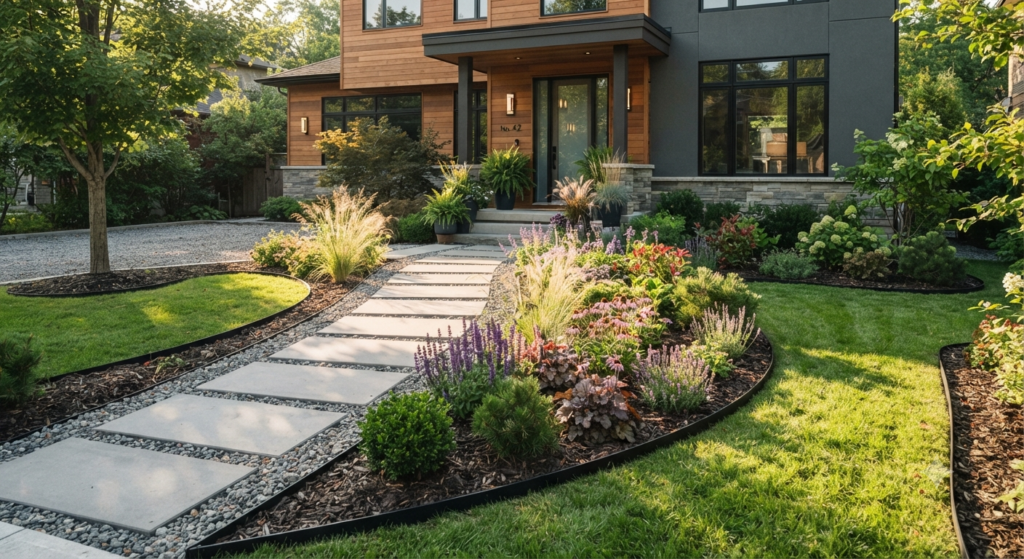
Modern Garden Landscaping
Modern landscapes feature clean lines, simple layouts, minimal planting, geometric shapes, and neutral-colored materials such as concrete, steel, and gravel.
Cottage Garden
Cottage gardens are full of colorful flowers, winding paths, climbing roses, and a relaxed natural appearance that feels warm and inviting.
Tropical Garden
Tropical landscaping includes lush green foliage, palm trees, large leafy plants, decorative stones, and water features that create a vacation-like atmosphere.
Japanese Garden
Japanese-inspired landscapes focus on simplicity, balance, and tranquility. Natural stones, bamboo, water, and carefully shaped plants create a peaceful setting.
Mediterranean Garden
Mediterranean gardens often feature drought-tolerant plants, gravel paths, terracotta pots, lavender, rosemary, and olive trees.
Choosing the Right Plants
Selecting plants that suit your climate is one of the most important landscaping decisions.
Consider:
- Local weather conditions
- Soil type
- Sunlight availability
- Mature plant size
- Water requirements
- Seasonal interest
Mixing evergreen shrubs, flowering plants, ornamental grasses, and shade trees creates a landscape that remains attractive throughout the year.
Native plants are often an excellent choice because they require less water, fewer chemicals, and generally adapt well to local conditions.
Designing Beautiful Garden Beds
Well-designed planting beds create structure and visual interest.
For the best results:
- Place taller plants toward the back.
- Use medium-sized plants in the middle.
- Position smaller flowers along the front edge.
- Repeat colors throughout the landscape for a cohesive look.
- Leave enough space for plants to reach their mature size.
Layering plants in this way creates depth while preventing overcrowding.
Hardscaping: The Foundation of Great Garden Landscaping
Plants bring life to a garden, but hardscaping gives it structure and functionality. Hardscaping refers to the non-living elements that define the layout of your outdoor space.
Popular hardscaping features include:
- Stone walkways
- Brick pathways
- Patios
- Retaining walls
- Decorative gravel
- Wooden decks
- Garden edging
- Stepping stones
Combining hardscaping with greenery creates a balanced garden landscaping design that remains attractive in every season.
Add Comfortable Outdoor Living Areas
Today’s gardens are more than places to grow plants. Many homeowners create outdoor living spaces where family and friends can gather.
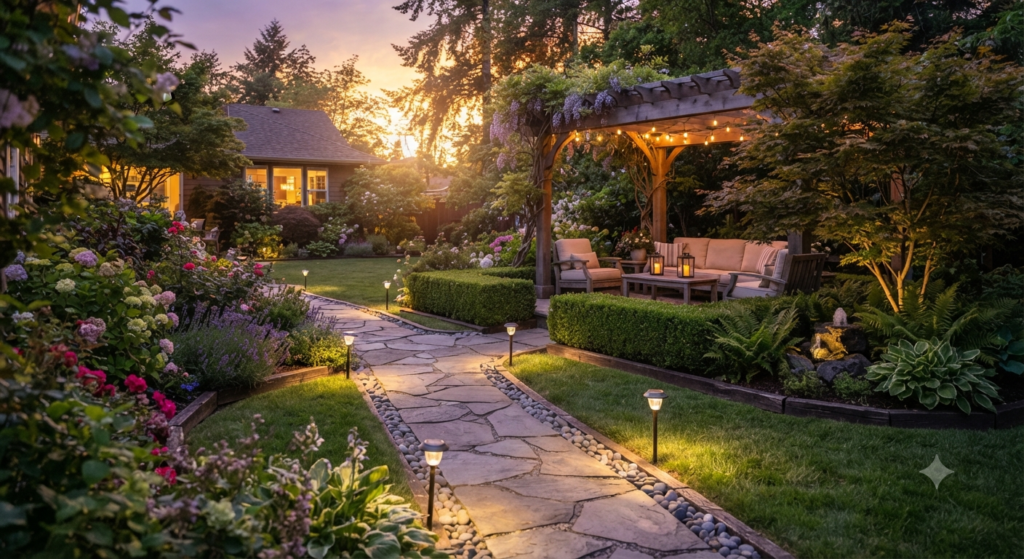
Consider adding:
Patio Seating
A simple seating area with weather-resistant furniture creates a relaxing place to enjoy your garden.
Pergolas and Gazebos
Pergolas provide partial shade while adding elegance to the landscape. Climbing plants such as roses or jasmine make them even more attractive.
Fire Pit Area
A fire pit creates a warm gathering space that can be enjoyed during cooler evenings.
Outdoor Dining Space
If you enjoy entertaining, include a dining table near your garden to make outdoor meals more enjoyable.
Garden Pathway Ideas
Walkways guide visitors through your landscape while protecting grass and flower beds.
Popular pathway materials include:
- Natural stone
- Brick pavers
- Gravel
- Concrete slabs
- Wood stepping rounds
Curved pathways often create a softer, more natural appearance than perfectly straight paths.
Water Features
Adding water instantly makes a garden feel more peaceful.
Popular options include:
- Small fountains
- Garden ponds
- Waterfalls
- Bird baths
- Bubbling rock fountains
Moving water also attracts birds and creates relaxing natural sounds.
Outdoor Garden Lighting
Lighting extends the beauty of your garden after sunset while improving safety.
Common lighting ideas include:
- Solar pathway lights
- Spotlights for trees
- Deck lighting
- String lights
- Wall-mounted lanterns
Warm lighting creates a welcoming atmosphere without overwhelming the landscape.
Lawn Design Tips
A healthy lawn often becomes the centerpiece of garden landscaping.
To keep grass looking its best:
- Mow regularly.
- Water deeply instead of lightly.
- Fertilize during the growing season.
- Remove weeds early.
- Aerate compacted soil when necessary.
Keeping lawn edges neatly trimmed also gives the entire landscape a professional appearance.
Low-Maintenance Garden Landscaping Ideas
Not everyone has time to care for a high-maintenance garden.
Fortunately, you can reduce maintenance without sacrificing beauty.
Consider these ideas:
- Choose native plants.
- Install mulch around plants.
- Use drought-tolerant flowers.
- Add drip irrigation.
- Reduce large lawn areas.
- Plant evergreen shrubs.
- Use decorative gravel in selected areas.
These improvements reduce watering, weeding, and overall maintenance.
Common Garden Landscaping Mistakes
Even beautiful landscapes can develop problems if they are poorly planned.
Avoid these common mistakes:
Planting Too Close Together
Crowded plants compete for sunlight, nutrients, and water.
Ignoring Mature Plant Size
Always check the mature height and width before planting.
Choosing the Wrong Plants
Plants that don’t suit your climate often struggle despite regular care.
Poor Drainage
Standing water can damage roots and encourage disease.
Too Many Design Styles
Combining several unrelated landscaping styles often creates a cluttered appearance.
Choosing one consistent theme usually produces a more attractive result.
Seasonal Garden Care
Every season requires different maintenance tasks.
Spring
- Clean garden beds.
- Add compost.
- Plant new flowers and shrubs.
- Apply fresh mulch.
Summer
- Water deeply.
- Deadhead flowers.
- Control weeds.
- Monitor pests.
Autumn
- Rake leaves.
- Divide perennials.
- Plant spring-flowering bulbs.
- Protect sensitive plants before winter.
Winter
- Prune dormant trees.
- Protect containers from freezing temperatures.
- Plan improvements for the coming season.
Regular seasonal care keeps garden landscaping healthy and beautiful throughout the year.
Frequently Asked Questions
What is garden landscaping?
Garden landscaping is the process of designing and improving outdoor spaces using plants, lawns, trees, pathways, patios, lighting, and decorative features. The goal is to create a garden that is both beautiful and practical.
How much does garden landscaping cost?
The cost depends on the size of the garden, the materials you choose, and the complexity of the design. Simple landscaping projects may be affordable, while complete backyard transformations require a larger budget.
What are the best plants for garden landscaping?
The best plants depend on your climate and soil conditions. Native plants, evergreen shrubs, ornamental grasses, flowering perennials, and shade trees are popular choices because they are attractive and relatively easy to maintain.
How can I make my garden low maintenance?
Choose drought-tolerant plants, apply mulch, install drip irrigation, reduce large lawn areas, and select plants that naturally thrive in your local climate.
When is the best time to start garden landscaping?
Spring and early fall are generally the best seasons because temperatures are moderate, allowing plants to establish strong roots before extreme summer heat or winter cold.
Beginner’s Garden Landscaping Checklist
Before starting your project, use this simple checklist:
- Measure your outdoor space.
- Decide on your landscaping style.
- Test your soil if needed.
- Choose plants suited to your climate.
- Plan pathways and seating areas.
- Install irrigation if necessary.
- Add mulch around plants.
- Leave enough space for future plant growth.
A little planning before planting will save time, money, and maintenance later.
Final Thoughts
Garden landscaping is one of the best ways to improve the beauty, comfort, and value of your home. Whether you’re redesigning a small front yard or creating a spacious backyard retreat, careful planning makes a significant difference.
A successful landscape combines healthy plants, practical hardscaping, comfortable outdoor living spaces, and year-round maintenance. By selecting the right plants, improving soil health, using quality materials, and following a simple maintenance routine, you can create a garden that remains attractive in every season.
Remember that great gardens are built over time. Start with a clear plan, add features gradually, and enjoy the process of watching your outdoor space grow into a place you’ll love for years to come. With thoughtful garden landscaping, even a modest yard can become a relaxing, welcoming, and beautiful outdoor living area.