

The Chinese money plant is one of those houseplants that instantly brightens up a room with its round, green leaves and simple beauty. It’s a popular choice because it looks great in almost any space and doesn’t require a lot of effort to grow. Even if you’re new to indoor plants, it’s a good one to start with.
At first, taking care of a Chinese money plant might seem a little confusing, especially if you’re not sure how much light or water it needs. The good news is that once you understand its basic care, it’s a fairly easy plant to keep healthy and happy.
In this guide, I’ll share simple Chinese money plant care tips, including the best lighting, watering, soil, and a few helpful tricks to encourage healthy growth. With the right care, your plant can stay fresh, vibrant, and continue producing new leaves over time.
What Is a Chinese Money Plant?
The Chinese money plant, or Pilea peperomioides, is a perennial plant originally associated with southwestern China. It is especially recognizable because of its round, flat leaves that grow on long stems.
The plant is often kept as an indoor houseplant because it can adapt well to typical home environments. Its compact growth habit also makes it suitable for desks, shelves, side tables, and other small spaces.
Understanding the natural growth pattern of the plant makes Chinese money plant care much easier. Instead of treating it like a plant that needs constant attention, focus on providing stable conditions and avoiding common problems such as overwatering.
17 Chinese Money Plant Care Tips
Successful Chinese money plant care comes down to a few important factors. Light, water, soil, humidity, temperature, feeding, and pruning all influence how well your Pilea grows.
1. Give Your Chinese Money Plant Bright Indirect Light
Light is one of the most important parts of Chinese money plant care. Pilea generally grows well in bright, indirect light.
Place the plant near a window where it receives plenty of natural brightness without being exposed to harsh direct sunlight for long periods. Strong direct sun can scorch the leaves and cause pale or brown patches.
If the plant receives too little light, growth may become slow and the stems can become stretched as the plant reaches toward the light source.
A bright room with filtered sunlight is often an excellent location.
2. Rotate the Plant Regularly
Chinese money plants naturally grow toward their light source. If you never rotate the pot, the plant may begin leaning strongly in one direction.
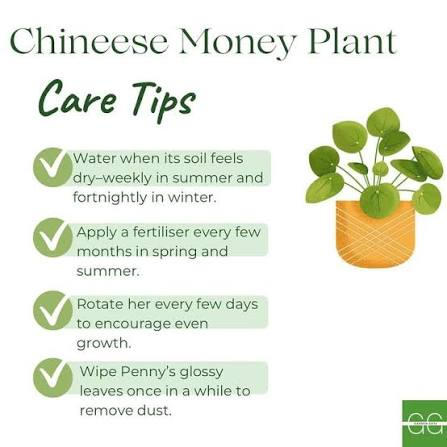
Rotate the container a little every week or two to encourage more balanced growth. This simple habit can make the plant look fuller and more symmetrical.
Regular rotation is an easy improvement to your overall Chinese money plant care routine.
3. Water When the Soil Begins to Dry
One of the most common mistakes with Pilea is watering too frequently.
Instead of watering according to a strict calendar, check the soil. When the upper portion of the growing medium has dried, it is generally time to water again.
Water thoroughly until some water drains from the bottom of the container, then allow excess water to escape.
The exact watering frequency depends on temperature, humidity, light, pot size, and soil composition.
4. Avoid Overwatering
Overwatering can create unhealthy root conditions and may eventually cause root rot.
Signs of excessive moisture can include yellowing leaves, soft stems, unpleasant-smelling soil, and leaves that fall unexpectedly.
Good Chinese money plant care means allowing the soil to dry partially between waterings rather than keeping it constantly wet.
Always use a container with drainage holes so excess water can leave the pot.
5. Use Well-Draining Soil
Pilea prefers a growing medium that drains efficiently while retaining enough moisture for healthy roots.
A quality indoor potting mix can work well. You can also improve drainage by incorporating materials such as perlite into a suitable houseplant mix.
Avoid extremely heavy soil that stays wet for long periods.
Good soil structure is especially important because the roots need access to both moisture and air.
Best Soil for Chinese Money Plant Care
The best soil for a Chinese money plant should be loose, airy, and well-draining.
A simple combination may include:
- Quality indoor potting soil
- Perlite for additional aeration
- Organic material such as compost in a moderate amount
The goal is not to create a soil mixture that dries instantly. Instead, the growing medium should hold some moisture while allowing excess water to drain away.
If water sits around the roots for a long time after watering, the soil may be too dense or the container may have inadequate drainage.
6. Choose a Pot With Drainage Holes
The container plays an important role in Chinese money plant care.
Choose a pot with drainage holes at the bottom. These holes allow excess water to escape and reduce the risk of waterlogged soil.
When repotting, avoid immediately moving a small Pilea into an extremely large container. A pot that is only moderately larger than the existing root system is usually easier to manage.
You can place the container inside a decorative outer pot if you want a more attractive display, but make sure excess water is emptied after watering.
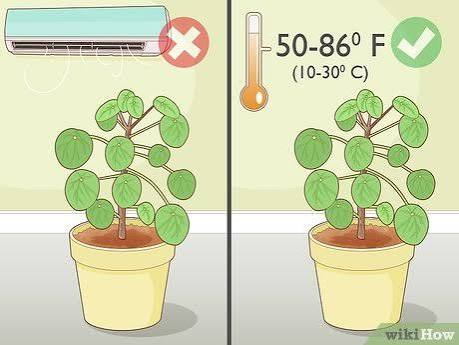
7. Maintain Comfortable Indoor Temperatures
Chinese money plants generally prefer comfortable indoor temperatures and should be protected from extreme cold.
Keep the plant away from freezing temperatures, cold drafts, and sudden temperature changes.
Avoid placing it directly beside heating vents or air-conditioning outlets because rapid changes in temperature and dry air can stress the plant.
A stable indoor environment usually makes Chinese money plant care easier.
8. Provide Moderate Humidity
Pilea can adapt to normal indoor humidity, but extremely dry air may cause problems for some plants.
If your home has very dry air, especially during periods when heating or cooling systems are running frequently, consider increasing humidity around the plant.
A humidifier can be useful if the room is consistently dry. Grouping several plants together may also slightly increase local humidity.
There is usually no need to keep the plant constantly misted.
9. Fertilize During Active Growth
A Chinese money plant can benefit from occasional feeding during its active growing period.
Use a balanced houseplant fertilizer according to the manufacturer’s instructions. Avoid applying excessive fertilizer because too many nutrients can damage roots and create salt buildup in the soil.
If the plant is growing slowly during a darker season, reducing fertilizer may be appropriate.
Fertilization should support your overall Chinese money plant care routine rather than replace good light, watering, and soil management.
10. Clean the Leaves
Dust can accumulate on the large, round leaves of a Pilea.
Gently wipe the leaves with a clean, slightly damp cloth when needed. This keeps the plant looking fresh and helps you notice pests or leaf problems early.
Avoid using harsh household cleaning products on the foliage.
Cleaning is a simple maintenance task that can make a noticeable difference in the plant’s appearance.
11. Prune Damaged Leaves
Remove yellow, dead, or severely damaged leaves using clean scissors.
Pruning helps maintain a tidy appearance and allows you to focus attention on healthy new growth.
Do not remove large numbers of healthy leaves unnecessarily. The plant needs its foliage to produce energy through photosynthesis.
12. Rotate and Trim Leggy Growth
If your Chinese money plant becomes tall and sparse, insufficient light may be one possible cause.
Move it to a brighter location with suitable indirect light and rotate the container regularly.
Light pruning can also help improve the shape of an overgrown plant. However, pruning alone will not solve a lighting problem.
If the plant repeatedly becomes leggy, reassess the amount and direction of light it receives.
13. Repot When Necessary
Pilea does not need to be repotted constantly.
Consider repotting when roots begin filling the container, water runs through the pot unusually quickly, or the growing medium has become compacted and difficult to manage.
Choose a new pot only slightly larger than the current one and use fresh, well-draining soil.
After repotting, give the plant time to adjust rather than immediately adding large amounts of fertilizer.
14. Propagate Chinese Money Plant Offsets
One of the most enjoyable features of Pilea is its ability to produce small offsets around the base.
When these baby plants have developed enough roots, they can potentially be separated from the parent plant and grown in their own containers.
Propagation is best done carefully so that the young plant has an established root system before being separated.
This makes the Chinese money plant a fun choice for gardeners who enjoy growing and sharing plants.
15. Watch for Common Pests
Although Pilea is generally manageable indoors, pests can occasionally appear.
Inspect the leaves and stems regularly for signs of insects, sticky residue, webbing, discoloration, or unusual leaf damage.
If you notice pests, isolate the affected plant from nearby houseplants and address the problem promptly using an appropriate plant-safe treatment.
Regular inspection is one of the simplest preventative steps in Chinese money plant care.
16. Give the Plant Enough Space
Avoid placing your Pilea in a crowded corner where its leaves constantly touch walls or other objects.
Adequate space improves air circulation and allows the plant to develop naturally.
A little room around the foliage also makes watering, cleaning, pruning, and pest inspection easier.
17. Keep Its Care Routine Consistent
Chinese money plants usually respond well to consistency.
Instead of constantly moving the plant, changing its soil, or adjusting its watering schedule, observe how it responds to its current environment.
Stable light, appropriate watering, good drainage, and occasional feeding can provide everything the plant needs.
Simple and consistent Chinese money plant care is often more effective than excessive attention.
How Much Light Does a Chinese Money Plant Need?
A Chinese money plant generally prefers bright, indirect light.
An east-facing or similarly bright location can be suitable depending on the conditions in your home. If the plant is placed near a very bright window, filtered light can help protect the leaves from intense direct rays.
Watch the plant’s growth pattern. If the stems become unusually long and the plant leans strongly toward one side, it may need a brighter location.
On the other hand, scorched or bleached-looking leaves may indicate excessive direct sunlight.
How Often Should You Water a Chinese Money Plant?
There is no universal watering schedule because indoor conditions vary.
Instead, check the soil before watering. If the upper layer has dried and the plant otherwise looks healthy, water thoroughly and allow the excess to drain.
During warm, bright periods, the plant may use water more quickly. In cooler or darker conditions, the soil may remain moist for longer.
Good Chinese money plant care means responding to the soil and environment rather than watering automatically every few days.
Why Are Chinese Money Plant Leaves Turning Yellow?
Yellow leaves can have several possible causes.
Overwatering is one common reason, particularly when the soil stays wet for long periods. Poor drainage, sudden environmental changes, insufficient light, or natural aging of older leaves may also contribute.
Check the soil moisture first. If it remains constantly wet, improve drainage and adjust your watering routine.
Do not immediately assume that every yellow leaf means the plant needs more water.
Why Is My Chinese Money Plant Drooping?
Drooping can happen because of underwatering, overwatering, environmental stress, or sudden changes in light and temperature.
Check the soil before doing anything else. If it is extremely dry, the plant may need water. If the soil is wet and the plant continues to droop, inspect the roots and drainage conditions.
Keeping the plant in a stable environment can also help prevent repeated stress.
Why Is My Chinese Money Plant Not Growing?
Slow growth may be related to insufficient light, poor nutrition, unsuitable temperature, root problems, or the plant naturally entering a slower growth period.
Start by checking the amount of light it receives. Then examine the soil and watering routine.
Avoid immediately adding large amounts of fertilizer. More fertilizer is not always the answer and can cause additional problems.
Why Are the Leaves Curling?
Curling leaves can result from several environmental issues, including inconsistent watering, excessive heat, very dry conditions, pests, or unsuitable light.
Inspect the leaves closely for insects and check the soil moisture.
If the plant is positioned close to a heater, air conditioner, or very hot window, move it to a more stable location with suitable indirect light.
How to Make a Chinese Money Plant Bushier
A bushier appearance usually starts with adequate light.
Place the plant in a bright location with suitable indirect light and rotate it regularly so growth remains balanced.
You can also prune excessively long or awkward stems with clean scissors. Over time, healthy plants may produce new growth and offsets around the base.
Avoid cutting healthy foliage excessively because the plant needs leaves to produce energy.
Chinese Money Plant Care in Different Seasons
Spring
Spring often brings increased growth and brighter light. Monitor soil moisture because the plant may begin using water more quickly.
This can also be a suitable time to repot or propagate a healthy plant if necessary.
Summer
During warmer months, check the soil more frequently. A plant receiving plenty of light may dry out faster than it does during winter.
Protect the leaves from excessive harsh sunlight and keep the plant away from extreme heat.
Autumn
As light levels decrease, growth may slow. Adjust watering according to how quickly the soil dries rather than maintaining a summer watering routine.
Winter
During winter, the plant may need less frequent watering because growth and water use can slow.
Keep it away from cold drafts and freezing temperatures, and avoid placing it directly next to heating equipment.
Common Chinese Money Plant Care Mistakes
Even an easy houseplant can develop problems when its basic requirements are ignored.
Overwatering
Keeping the soil constantly wet is one of the most common problems. Always consider soil moisture before watering.
Poor Drainage
A pot without drainage holes can allow excess water to remain around the roots.
Too Much Direct Sun
Strong direct sunlight can scorch the foliage. Bright filtered or indirect light is generally safer.
Too Little Light
Insufficient light can cause slow or stretched growth.
Excessive Fertilizer
More fertilizer does not necessarily mean faster growth. Follow product instructions carefully.
Frequent Relocation
Constantly changing the plant’s environment can create unnecessary stress. Find a suitable location and allow the plant time to adapt.
Quick Chinese Money Plant Care Checklist
For an easy routine, remember these essentials:
- Provide bright, indirect light.
- Rotate the pot regularly.
- Let the upper soil layer dry before watering.
- Avoid waterlogged soil.
- Use a well-draining potting mix.
- Always use a container with drainage holes.
- Keep temperatures comfortable and stable.
- Feed moderately during active growth.
- Clean dusty leaves gently.
- Remove damaged foliage.
- Inspect regularly for pests.
- Repot only when necessary.
- Give the plant enough space to grow.
Frequently Asked Questions About Chinese Money Plant Care
How often should I water a Chinese money plant?
Water when the upper portion of the soil has dried rather than following a fixed schedule. The exact frequency depends on light, temperature, humidity, pot size, and soil.
Does a Chinese money plant need direct sunlight?
It generally prefers bright, indirect light. Strong direct sunlight can scorch its leaves, especially when the plant is close to a hot window.
What is the best soil for a Chinese money plant?
A loose, well-draining indoor potting mix is usually suitable. Adding perlite can help improve aeration and drainage.
Why are my Chinese money plant leaves turning yellow?
Yellow leaves can result from overwatering, poor drainage, insufficient light, environmental stress, or natural aging. Check the soil and growing conditions before changing the watering routine.
Can Chinese money plants grow in low light?
They may tolerate lower light for a period, but brighter indirect light generally supports stronger and more compact growth.
How can I make my Chinese money plant grow faster?
Provide suitable bright indirect light, appropriate watering, good drainage, comfortable temperatures, and moderate nutrition during active growth. Avoid overwatering or excessive fertilizer.
How do I propagate a Chinese money plant?
Healthy offsets that develop around the base can potentially be separated once they have an established root system and planted in their own container.
Should I mist my Chinese money plant?
Misting is generally not essential. If indoor air is consistently very dry, a humidifier or another method of increasing room humidity may be more effective.
Why is my Chinese money plant leaning?
Leaning often happens when the plant grows toward a light source. Move it to a brighter location with suitable indirect light and rotate the pot regularly.
When should I repot a Chinese money plant?
Repot when the plant becomes noticeably root-bound, the soil structure deteriorates, or the container no longer provides enough room for healthy root growth.
Final Thoughts on Chinese Money Plant Care
Taking care of a Chinese money plant is much easier once you understand what it needs. A little attention to light, watering, and the right soil can help it stay healthy and keep producing fresh new leaves throughout the year.
Remember that every plant grows at its own pace, so don’t worry if you don’t see quick results. Staying consistent with your care routine and making small changes when needed will help your plant thrive over time.
I hope this guide has made Chinese money plant care feel a little less confusing and more enjoyable. With the right care and a bit of patience, you can keep your plant looking healthy, vibrant, and beautiful for years to come.