

Companion planting is a simple and natural way to help your vegetable garden grow better by placing plants together that can benefit each other. The right plant combinations may help attract beneficial insects, make better use of garden space, and support healthier growth. If you are planning your vegetable garden, a companion planting chart for vegetables can make it much easier to know which plants grow well together.
In this guide, we’ll share 15 of the best companion planting combinations for vegetables, along with helpful ideas for pairing common garden crops. Whether you’re a beginner or already growing your own vegetables, these combinations can help you plan a more productive and well-organized garden.
What Is Companion Planting?
Companion planting is the practice of growing different plant species near one another because they may provide useful benefits within the garden.
These benefits can include:
- Better use of garden space
- Support for pollinators
- Habitat for beneficial insects
- Shade for sensitive crops
- Different plant heights and structures
- More diverse garden beds
- Improved garden planning
Not every commonly recommended combination has strong scientific evidence behind it, so gardeners should treat companion planting as one part of an overall gardening strategy. A companion planting chart for vegetables can help beginners organize these combinations more easily.
Companion Planting Chart for Vegetables
Use this companion planting chart for vegetables as a starting point when planning your garden beds. The following companion planting chart for vegetables gives you an easy starting point for planning your garden.
| Vegetable | Good Companion Plants | Plants to Separate or Use Carefully |
|---|---|---|
| Tomatoes | Basil, carrots, lettuce, parsley | Fennel, large brassicas |
| Carrots | Lettuce, beans, peas, rosemary | — |
| Lettuce | Carrots, radishes, cucumbers, onions | — |
| Cucumbers | Beans, peas, radishes, dill | Potatoes |
| Peppers | Basil, carrots, onions, parsley | Fennel |
| Beans | Carrots, cucumbers, radishes | Onions, garlic |
| Radishes | Lettuce, cucumber, peas, carrots | — |
| Broccoli | Lettuce, onions, herbs | Large spreading plants |
| Cabbage | Dill, celery, onions, herbs | Fennel |
| Corn | Beans, cucumbers, squash | Tomatoes in crowded beds |
| Potatoes | Beans, peas, cabbage-family crops | Tomatoes |
| Spinach | Radishes, peas, strawberries | — |
| Peas | Carrots, radishes, lettuce, spinach | Onions, garlic |
| Beets | Lettuce, onions, bush beans | Pole beans in some layouts |
| Zucchini | Corn, beans, dill, nasturtiums | Overcrowding |
Use the chart as a planning guide rather than a strict rule. Your local climate, garden design, soil, and individual plant varieties can affect how well combinations perform.
1. Tomatoes and Basil
Tomatoes and basil are one of the most popular combinations in home gardens.
Basil grows relatively compactly and can fit around tomato plants without taking up excessive space.
Both plants enjoy warm growing conditions and plenty of sunlight.
However, avoid overcrowding them. Tomatoes need good airflow to reduce the risk of foliage remaining wet for long periods.
2. Carrots and Lettuce
Carrots and lettuce can make efficient use of garden space because their growth patterns are different.
Lettuce develops a relatively shallow root system, while carrots develop downward into the soil.
This combination can be particularly useful in raised beds and intensive vegetable gardens.
Plant them with enough space for mature growth rather than placing them too close together.
3. Cucumbers and Radishes
Cucumbers and radishes can work well together in a vegetable garden.
Radishes grow quickly and can be harvested before cucumber plants become large and spread across the bed.
This makes the combination useful for gardeners who want to maximize space.
4. Beans and Carrots
Beans and carrots can complement each other in mixed vegetable beds.
Carrots grow below the soil while beans develop above it, allowing gardeners to use different layers of growing space.
Avoid overcrowding because both crops need adequate sunlight and airflow.
5. Peppers and Basil
Peppers and basil are another popular garden combination.
Both prefer warm conditions and can be grown in sunny garden beds or containers.
Basil can also add variety and color around pepper plants.
Keep enough space between plants so the pepper foliage does not become excessively crowded.
6. Lettuce and Radishes
Lettuce and radishes are excellent choices for gardeners who enjoy quick-growing crops.
Radishes mature relatively quickly, while lettuce can be harvested at different stages.
They can be planted together in raised beds, containers, and small gardens.
7. Corn, Beans, and Squash
Corn, beans, and squash are often discussed together as a traditional combination sometimes called the Three Sisters.
The plants have different growth habits.
Corn grows vertically, beans can climb, and squash spreads across the ground.
This arrangement can make efficient use of space, although it requires careful planning.
Modern gardeners should choose varieties with compatible growth rates and provide enough space for each crop.
8. Broccoli and Lettuce
Broccoli and lettuce can be combined in gardens where space is limited.
Lettuce generally stays lower while broccoli develops a taller structure.
This can allow gardeners to use vertical space and ground space more efficiently.
During hot weather, lettuce may benefit from partial shade, although the exact requirements depend on the variety and climate.
9. Cucumbers and Dill
Dill can be a useful addition to a cucumber garden because flowering herbs can attract beneficial insects.
Allow dill to flower if your goal is to provide resources for pollinators and other helpful insects.
Keep in mind that dill can become large and may self-seed, so give it enough space.
10. Peas and Spinach
Peas and spinach can be useful cool-season companions.
Both can perform well during cooler parts of the growing season.
In warmer climates, spinach may struggle as temperatures rise, so timing is important.
Plant cool-season vegetables during the appropriate part of your local growing calendar.
11. Zucchini and Beans
Zucchini plants spread widely, while beans can grow upward depending on the variety.
Combining crops with different growth habits can help make better use of garden space.
However, zucchini leaves can become very large, so avoid planting it where it will shade smaller plants excessively.
12. Beets and Lettuce
Beets and lettuce can work well together in raised beds.
Both can be grown during cooler conditions, depending on the local climate.
Their different root structures can also make efficient use of available soil space.
13. Potatoes and Beans
Some gardeners combine potatoes with beans to make better use of garden space.
However, the specific layout matters.
Keep plants adequately spaced and avoid planting potatoes in a location where they have recently been grown, particularly when following a crop rotation plan.
14. Cabbage and Dill
Dill can be an attractive addition to a cabbage-family garden.
Its flowers can provide resources for beneficial insects.
Cabbage and related crops need enough room to develop large leaves, so do not overcrowd the bed.
15. Onions and Carrots
Onions and carrots are commonly grown near each other in home gardens.
They have different growth structures and can fit together in many garden layouts.
Good spacing remains important because crowded plants compete for available light, water, and nutrients.
Companion Planting Chart for Vegetables in Raised Beds
Raised beds are ideal for companion planting because gardeners have more control over spacing and soil preparation.
For a small raised bed, you could combine:
Bed 1: Tomatoes + basil + lettuce
Bed 2: Carrots + radishes + onions
Bed 3: Cucumbers + dill + radishes
Bed 4: Peppers + basil + carrots
Bed 5: Beans + lettuce + carrots
The exact arrangement should be adjusted according to the mature size of each plant.
Avoid filling every available space simply because the plants are considered companions.
Good airflow and adequate root space are still important.
Best Companion Plants for Tomatoes
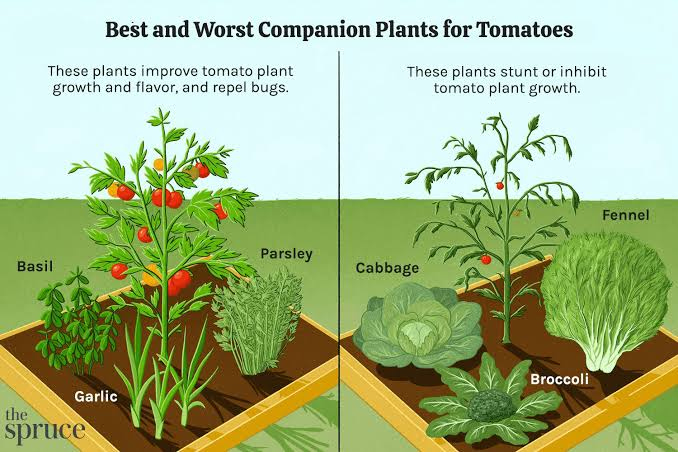
Tomatoes are among the most popular vegetables for companion planting.
Commonly used companions include:
- Basil
- Carrots
- Lettuce
- Parsley
- Onions
- Marigolds
Basil and parsley can add diversity around tomato plants, while lettuce can make use of lower-growing space.
The most important factors for tomatoes remain sunlight, appropriate watering, fertile soil, support, and good spacing.
Best Companion Plants for Cucumbers
Cucumbers can be grown with several crops, including:
- Beans
- Peas
- Radishes
- Dill
- Lettuce
- Nasturtiums
Because cucumber vines can spread quickly, use trellises when appropriate.
Vertical growing can free up ground space for smaller crops.
Best Companion Plants for Peppers
Popular companions for peppers include:
- Basil
- Carrots
- Onions
- Parsley
- Lettuce
Peppers prefer warm growing conditions and adequate sunlight.
Do not let companion plants become so large that they shade pepper plants for most of the day.
Best Companion Plants for Carrots
Carrots can be paired with:
- Lettuce
- Radishes
- Beans
- Peas
- Onions
- Rosemary
Radishes can be particularly useful in mixed beds because they mature faster than carrots.
This allows gardeners to harvest the radishes while the carrots continue developing.
Best Companion Plants for Lettuce
Lettuce can be combined with:
- Carrots
- Radishes
- Cucumbers
- Peas
- Spinach
- Beets
Because lettuce is relatively low-growing, it can fit into many mixed vegetable layouts.
In hot climates, use taller plants strategically to provide some afternoon shade if the lettuce variety benefits from it.
Plants You Should Be Careful About Combining
Companion planting advice online can sometimes be overly absolute.
Rather than assuming that two plants can never grow together, consider the actual garden conditions.
Tomatoes and Potatoes
Tomatoes and potatoes belong to the same plant family and can share some diseases.
Keeping them separated can be useful, especially when practicing crop rotation and disease management.
Fennel and Many Garden Plants
Fennel is often kept separate from vegetable beds because it can have unusual effects on neighboring plants.
Growing fennel in its own area can make garden planning easier.
Large Plants and Small Plants
A plant does not have to be chemically incompatible with another plant to cause problems.
A huge zucchini plant can simply overwhelm a small lettuce crop through shade and competition.
How to Use a Companion Planting Chart for Vegetables
A chart becomes most useful when you combine it with your actual garden conditions. Learning to read a companion planting chart for vegetables can make garden planning much simpler.
Step 1: List Your Vegetables
Write down everything you want to grow.
Step 2: Check Plant Size
Identify which crops grow tall, wide, compact, or vertically.
Step 3: Group Similar Needs
Place vegetables with similar sunlight, watering, and soil requirements together.
Step 4: Add Helpful Companions
Choose herbs, flowers, or vegetables that fit your available space.
Step 5: Plan Spacing
Follow the recommended spacing for each crop.
Step 6: Consider Crop Rotation
Avoid growing the same plant family repeatedly in the same location.
Step 7: Monitor the Garden
Watch for pests, disease, overcrowding, and competition.
Companion Planting for Small Vegetable Gardens
You do not need a large backyard to use companion planting. A companion planting chart for vegetables is especially helpful when working with limited garden space.
A small garden can include combinations such as:
- Tomato + basil
- Pepper + parsley
- Carrot + radish
- Lettuce + beet
- Cucumber + dill
- Bean + carrot
Containers can also be used for some combinations.
Choose large enough containers and avoid combining plants with dramatically different water or space requirements.
Companion Planting in Containers
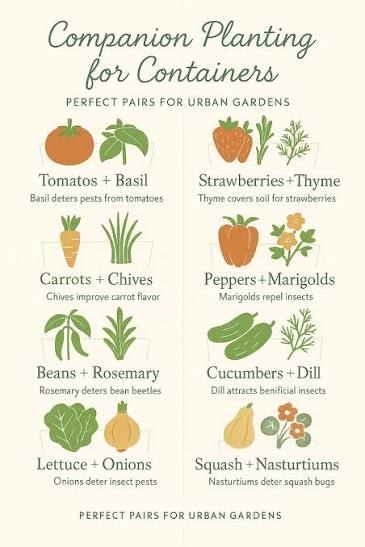
Container companion planting requires more careful planning because roots have limited space.
For example, a large tomato plant may eventually dominate a small container.
Instead, consider combinations with compatible mature sizes.
A large container might support a tomato with a small herb, while separate containers can be used for crops with larger root systems.
Always provide drainage holes and use a quality container-growing mix. Before combining crops, check a companion planting chart for vegetables and compare the mature size of each plant.
Do Companion Plants Really Prevent Pests?
Companion planting should not be considered a guaranteed pest-control method.
Some plants may attract beneficial insects, provide habitat, or make a garden more diverse.
However, serious pest problems may still require additional management.
Inspect plants regularly and use appropriate integrated pest management techniques when necessary.
How Flowers Can Help a Vegetable Garden
Flowers can play an important role in a companion planting strategy.
Plants such as marigolds, nasturtiums, calendula, and other flowering species can add color and may provide resources for pollinators and beneficial insects.
Instead of thinking only about vegetable-to-vegetable combinations, consider building a diverse garden that includes vegetables, herbs, and flowers.
Common Companion Planting Mistakes
1. Ignoring Plant Size
Always consider the mature size of every crop.
2. Overcrowding
Even compatible plants need adequate space.
3. Forgetting Sunlight Requirements
A tall crop can shade a short crop.
4. Mixing Plants With Different Water Needs
Group plants with similar moisture requirements when possible.
5. Treating Companion Planting as Pest Control
Companion plants do not eliminate all pests.
6. Ignoring Crop Rotation
Plant families should be considered when planning future seasons.
7. Following Every Online Claim
Not every companion planting recommendation has strong scientific evidence.
Use reputable gardening resources and observe what works in your own garden.
Frequently Asked Questions About Companion Planting Chart for Vegetables
What is the best companion planting chart for vegetables?
A useful companion planting chart for vegetables should show compatible combinations while also considering sunlight, mature size, water requirements, spacing, and crop families.
What vegetables grow well together?
Popular combinations include tomatoes with basil, carrots with radishes, cucumbers with dill, peppers with basil, and lettuce with radishes.
What should not be planted next to tomatoes?
Avoid overcrowding tomatoes with large plants. Tomatoes and potatoes are also commonly separated because they belong to the same plant family and can share some diseases.
Can tomatoes and basil grow together?
Yes. Tomatoes and basil are a popular combination in home vegetable gardens, provided both receive enough sunlight and adequate space.
Can cucumbers and tomatoes be planted together?
They can be grown in the same general garden area, but both can become large plants. Proper spacing, airflow, and support are important.
What is a good companion plant for carrots?
Lettuce, radishes, peas, beans, and onions are commonly used alongside carrots.
What grows well with peppers?
Basil, carrots, onions, parsley, and lettuce can work well with peppers when their space and sunlight requirements are compatible.
What vegetables should be planted together in a raised bed?
Tomatoes and basil, carrots and radishes, cucumbers and dill, and peppers and herbs are useful combinations for many raised-bed gardens.
Does companion planting increase vegetable yields?
It can help gardeners use space efficiently and create more diverse garden environments, but there is no guarantee that every companion combination will increase yields.
Is companion planting good for beginners?
Yes. It can be a fun and practical way to learn about plant spacing, garden diversity, pollinators, and vegetable planning.
Final Thoughts
Companion planting is an easy way to make your vegetable garden more organized and productive while working with nature. Choosing the right plant combinations can help you make better use of your garden space and create a healthier growing environment for your vegetables.
The 15 companion planting combinations in this guide are a great starting point, especially if you’re new to companion gardening. Keep in mind that every garden is different, so pay attention to your plants and see which combinations work best in your own growing conditions. With a little planning, companion planting can make your vegetable garden healthier, more diverse, and enjoyable to grow.