

Having a beautiful backyard doesn’t always mean you need a big space or spend a lot of money. With a few simple ideas, you can easily turn your backyard into a fresh, peaceful, and welcoming place. Adding some flowers, greenery, a small seating area, or even growing your own vegetables can make the space feel much more enjoyable.
In this article, I’m sharing some simple backyard garden ideas that you can actually try at home. Whether your backyard is small or spacious, these ideas can help you make it look beautiful while creating a cozy place where you can relax and enjoy nature.
Plan Your Backyard Before You Start
Before buying plants or garden decorations, take some time to understand your backyard.
Observe how much sunlight different areas receive throughout the day. Some parts may receive full sun, while others may be shaded by your house, trees, fences, or neighboring buildings.
Also consider:
- Soil type
- Drainage
- Existing trees and shrubs
- Available water
- Wind exposure
- Privacy
- Walking paths
- Maintenance time
- Local climate
Planning first can help you avoid choosing plants that are unsuitable for your conditions.
A beautiful backyard garden should not only look good when it is newly planted. It should also remain manageable as plants mature.
Create a Backyard Vegetable Garden
One of the most useful backyard garden ideas is creating a dedicated vegetable-growing area.
A vegetable garden can provide fresh produce while making your backyard more productive. You can grow vegetables directly in the ground, in raised beds, or in containers.
Popular choices include:
- Tomatoes
- Peppers
- Cucumbers
- Lettuce
- Carrots
- Radishes
- Green beans
- Zucchini
- Spinach
- Kale
Choose vegetables according to your local growing season and available sunlight.
If you are new to gardening, start with a few vegetables that are relatively easy to grow rather than planting everything at once.
Among the most practical backyard garden ideas, a vegetable garden can make your outdoor space both beautiful and productive.
Design a Raised Bed Garden
Raised beds are a practical choice for many backyard gardens.
They provide a defined growing area and can make it easier to organize vegetables, herbs, and flowers. You can also fill them with suitable soil rather than relying entirely on the existing ground soil.
Raised beds can be made from various materials, including untreated wood, stone, bricks, or other garden-safe materials.
Keep the beds narrow enough that you can comfortably reach the plants from the sides. Avoid making a bed so wide that you have to step into the growing area to reach the center.
Create a Flower-Filled Backyard
If your main goal is beauty, consider turning part of your backyard into a colorful flower garden.
Combine plants with different heights and bloom times to create visual interest throughout the growing season.
You could combine:
- Tall flowers toward the back
- Medium-height plants in the middle
- Low-growing flowers along the edges
- Ground covers in open spaces
Choose flowers that are appropriate for your climate and sunlight conditions.
Native plants can also be an excellent option because they are adapted to local environmental conditions and can provide valuable resources for local wildlife. Colorful flowers are another simple way to make backyard garden ideas more attractive and welcoming.
Add a Small Herb Garden
Herbs are useful, attractive, and often suitable for relatively small spaces.
Create an herb garden near your kitchen, patio, or outdoor seating area so that fresh herbs are easy to access.
Consider growing:
- Basil
- Rosemary
- Thyme
- Parsley
- Oregano
- Chives
- Sage
Keep plants with similar water and sunlight needs together when possible.
Mint should generally be grown in a container because it can spread aggressively in garden beds.
Use Containers Around the Backyard
Containers are among the most flexible backyard garden ideas because they allow you to add plants almost anywhere.
Use containers around patios, steps, entrances, seating areas, and garden paths.
You can grow:
- Flowers
- Herbs
- Vegetables
- Small shrubs
- Ornamental grasses
- Compact fruit plants
Choose containers that are large enough for the mature plant and have adequate drainage.
Mix different container heights to create a layered appearance. These backyard garden ideas are especially useful when you want to add plants without creating permanent garden beds.
Build a Vertical Garden
When ground space is limited, look upward.
Vertical gardening allows you to use fences, walls, trellises, arches, and other structures for climbing plants.
- Cucumbers
- Peas
- Beans
- Climbing flowers
- Certain vines
- Some small fruits
Vertical gardens can also add privacy and create a strong visual feature.
Make sure climbing structures are sturdy enough to support mature plants.
Vertical gardening is one of the smartest backyard garden ideas for making use of limited ground space.
Create a Backyard Pollinator Garden
A pollinator garden can add beauty while providing useful habitat and food resources for bees, butterflies, and other beneficial insects.
Choose a variety of flowering plants that bloom during different parts of the growing season.
Native flowering plants are often particularly valuable for local pollinators.
Avoid creating a garden with only one type of flower. A diverse selection of plants can provide more resources throughout the season.
You can also include shallow water sources and sheltered areas where appropriate.
Add a Relaxing Seating Area
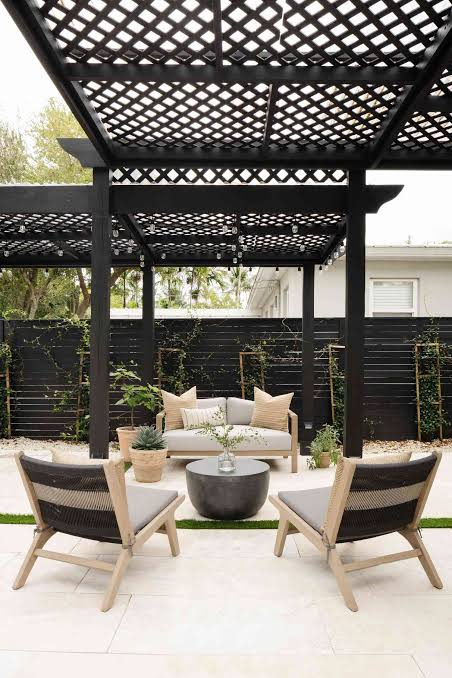
A garden should be a place you can enjoy, not just look at.
Create a comfortable seating area surrounded by greenery.
Depending on the available space, you could use:
- A small bench
- Outdoor chairs
- A bistro table
- A hammock
- A compact lounge set
Place seating where you can enjoy the garden view.
Surrounding a seating area with plants can make it feel more private and peaceful. Combining plants with comfortable furniture is one of the most relaxing backyard garden ideas for homeowners.
Create a Backyard Garden Path
A garden path can make your backyard feel more organized and intentional.
Paths can be made from materials such as:
- Stepping stones
- Gravel
- Brick
- Pavers
- Natural stone
- Wood
A path does not need to be complicated.
Even a simple walkway between a vegetable bed and seating area can improve the functionality of your backyard.
Keep the path wide enough to walk comfortably and consider how you will move gardening tools or equipment through the space.
Add Privacy With Plants
If your backyard is visible to neighbors, plants can create a natural privacy screen.
Consider using:
- Shrubs
- Small trees
- Ornamental grasses
- Climbing vines
- Dense native plants
Choose species that match the mature size you need.
Avoid planting a fast-growing tree too close to your house, fence, underground utilities, or other structures.
A layered privacy garden can look more natural than a solid wall of one plant. Natural privacy screens are among the most useful backyard garden ideas for creating a more peaceful outdoor environment.
Create a Small Fruit Garden
If your climate allows it, consider adding edible fruit plants to your backyard.
Depending on your region, possibilities may include:
- Strawberries
- Blueberries
- Raspberries
- Blackberries
- Dwarf fruit trees
Fruit plants require appropriate sunlight, soil, watering, and sometimes specific pollination conditions.
Choose varieties suited to your local climate rather than selecting plants based only on appearance. These backyard garden ideas can help you make a small outdoor area feel larger, greener, and more functional.
Try a Cottage Garden Style
A cottage-style backyard garden has a relaxed, colorful, and slightly informal appearance.
Instead of arranging every plant in perfectly straight lines, combine flowers, herbs, shrubs, and other plants in a natural-looking layout.
You can include:
- Flowering perennials
- Annual flowers
- Herbs
- Climbing plants
- Small shrubs
A cottage garden works especially well around seating areas, pathways, and traditional homes.
Create a Modern Backyard Garden
For a modern appearance, keep the design simple.
Use clean lines, repeated plant forms, and a limited selection of materials.
You might combine:
- Gravel
- Large planters
- Geometric raised beds
- Ornamental grasses
- Evergreen plants
- Simple outdoor furniture
Repeating the same materials and plant types can make the space look cohesive.
Avoid adding too many unrelated decorations.
Design a Low-Maintenance Backyard
Not everyone has time for daily gardening.
If you want an attractive backyard without extensive maintenance, choose plants that are naturally suited to your climate and conditions.
Native plants, drought-tolerant species, hardy perennials, and well-adapted shrubs can reduce maintenance in many situations.
You can also reduce work by using:
- Mulch
- Drip irrigation
- Automatic timers
- Durable ground covers
- Clearly defined planting areas
The goal is not to create a completely maintenance-free garden. Instead, create a garden that fits the amount of time you realistically have. Simple backyard garden ideas can also reduce the amount of time and effort needed for regular garden maintenance.
Add Mulch Around Garden Beds
Mulch can improve the appearance of garden beds while helping conserve soil moisture and reduce weed growth.
Organic mulch options can include:
- Shredded bark
- Wood chips
- Compost
- Straw
- Leaves
Keep mulch away from direct contact with plant stems and tree trunks.
The right mulch depends on the type of garden and your local conditions.
Create a Backyard Garden for Kids
A backyard garden can become a fun learning environment for children.
Give children a small area where they can plant easy-to-grow vegetables or flowers.
Sunflowers, beans, radishes, lettuce, and some herbs can be interesting choices.
You can also create a small digging area, sensory garden, or pollinator section.
Choose plants carefully and avoid toxic species or features that may create safety concerns.
Use a Garden Trellis as a Decorative Feature
A trellis does not have to be used only for vegetables.
It can become a decorative focal point when covered with suitable climbing plants.
Place a trellis:
- Behind a seating area
- Along a fence
- At the entrance to a garden
- Beside a patio
- Between different garden sections
A trellis can also add height to an otherwise flat landscape.
Create a Small Rock Garden
Rock gardens are useful for sunny areas and can work well with drought-tolerant plants.
Use different sizes of rocks to create natural-looking layers.
Suitable plants depend on your climate, but options may include certain:
- Sedums
- Succulents
- Ornamental grasses
- Small flowering perennials
- Native drought-tolerant plants
Avoid assuming that every plant labeled as drought-tolerant will work in every region.
Add a Water Feature
A small water feature can create a relaxing focal point.
You do not need a large pond.
Consider a:
- Small fountain
- Compact pond
- Bubbling water feature
- Decorative water bowl
Choose a design that fits your garden and maintenance preferences.
If children or pets regularly use the backyard, consider safety when selecting an open-water feature.
Use Backyard Garden Ideas for Shade
Not every backyard receives full sunlight.
If your garden has shaded areas, choose plants that can tolerate the available light rather than trying to force sun-loving plants to grow there.
Depending on your climate and shade level, options may include:
- Ferns
- Hostas
- Heucheras
- Certain native woodland plants
- Shade-tolerant flowering plants
The amount of shade matters. Bright indirect light, partial shade, and deep shade can create very different growing conditions.
Make the Most of a Small Backyard
A small backyard does not mean you have to choose between beauty and productivity.
Use vertical structures, compact plants, containers, raised beds, and multi-purpose spaces.
For example, a seating area can also include containers around its edges.
A fence can become a vertical garden.
A sunny corner can become a vegetable bed.
A narrow side area can become an herb garden.
Thoughtful zoning allows one small backyard to serve several purposes.
Create a Wildlife-Friendly Garden
A diverse backyard can provide habitat for birds, butterflies, bees, and other wildlife.
Include a mixture of flowering plants, shrubs, trees, and ground-level vegetation where appropriate.
Native plants can be especially useful because local wildlife may be adapted to them.
Avoid excessive pesticide use and provide suitable shelter and water when possible.
A wildlife-friendly garden does not need to look messy. You can create clearly defined planting areas while still supporting biodiversity.
Add Edible Flowers and Herbs
An edible garden can also be decorative.
Some herbs produce attractive flowers, while certain edible flowers can add color.
Nasturtiums, chives, lavender, and other plants may combine ornamental and edible qualities depending on the variety and intended use.
Always verify that a plant is edible before consuming it.
Create a Backyard Garden on a Budget
You do not have to spend a fortune on landscaping.
Start with what you already have.
Reuse suitable containers, divide established perennials where appropriate, grow plants from seeds, and make small improvements gradually.
Prioritize:
- Healthy soil
- Suitable plants
- Good drainage
- Proper sunlight
- Basic irrigation
Decorative features can be added later.
A well-planned garden with healthy plants usually looks better than an expensive garden that is poorly suited to the site.
Choose Plants Based on Your Climate
One of the most important parts of successful backyard gardening is selecting plants that can handle your local conditions.
Consider:
- Winter temperatures
- Summer heat
- Rainfall
- Humidity
- Soil conditions
- Sun exposure
For gardeners in the United States, the USDA Plant Hardiness Zone system can be a useful starting point for understanding winter temperature conditions.
However, hardiness zone is only one factor. Sunlight, soil, rainfall, and local microclimates also matter.
Make Your Backyard Garden More Sustainable
Sustainable gardening can reduce waste and support a healthier outdoor environment.
Consider composting suitable organic materials, collecting rainwater where legal and practical, choosing native plants, and reducing unnecessary lawn areas.
You can also choose plants that are appropriate for local conditions rather than constantly replacing plants that cannot tolerate your climate.
Using mulch and efficient irrigation can help reduce water waste.
Organize Your Backyard Into Garden Zones
Dividing your backyard into functional zones can make the space easier to use.
You might have:
Growing zone: Vegetables, herbs, and fruit.
Relaxation zone: Seating and shade.
Pollinator zone: Flowering plants.
Pathway zone: Walking routes.
Storage zone: Tools and gardening supplies.
The zones do not need to be separated by walls. Different planting arrangements, paths, or changes in materials can visually define each area.
Common Backyard Gardening Mistakes
Choosing Plants Without Checking Their Mature Size
A plant that looks small at the garden center can become surprisingly large.
Always research its mature height and width.
Planting Without Considering Sunlight
A plant’s light requirements should match the location where it will grow.
Overcrowding Garden Beds
Plants need enough room for airflow, roots, and healthy development.
Ignoring Drainage
Poor drainage can cause serious root problems.
Creating Too Much Lawn
If you are interested in gardening, consider converting some lawn into productive or decorative planting areas.
Making the Garden Too Complicated
A complicated design can become difficult to maintain.
Start simple and add features gradually.
Backyard Garden Ideas for Every Season
A successful backyard does not have to look exactly the same throughout the year.
Spring can bring bulbs, flowering trees, and early vegetables.
Summer can provide colorful flowers, tomatoes, peppers, cucumbers, and outdoor seating.
Fall can add ornamental grasses, autumn foliage, cool-season vegetables, and seasonal flowers.
Winter interest can come from evergreen plants, attractive tree structures, ornamental bark, and garden features.
Choose plants with different seasonal characteristics so the backyard remains interesting throughout the year.
How to Maintain a Backyard Garden
Regular maintenance helps keep a garden healthy and attractive.
Check plants for pests and disease.
Water according to soil moisture and plant requirements rather than following an automatic schedule.
Remove dead or diseased plant material when appropriate.
Keep pathways clear and prune plants according to their specific needs.
Refresh mulch when necessary and monitor containers because they often dry faster than garden beds.
The best maintenance routine is one that you can consistently follow.
Frequently Asked Questions About Backyard Garden Ideas
What are the best backyard garden ideas for beginners?
Raised beds, container gardens, herb gardens, simple flower borders, and small vegetable plots are excellent choices for beginners. Start with plants suited to your climate and sunlight.
How can I make my backyard look beautiful?
Use a combination of healthy plants, defined garden beds, pathways, comfortable seating, and a consistent design style. Avoid overcrowding and choose plants that fit the available space.
What can I grow in a small backyard?
You can grow herbs, vegetables, flowers, strawberries, compact shrubs, and suitable fruit plants. Vertical gardening and containers can help maximize limited space.
How do I create a low-maintenance backyard garden?
Choose plants suited to your local conditions, use mulch, install efficient irrigation, group plants with similar needs, and avoid species that require more care than you can provide.
What are good backyard plants for beginners?
Herbs, lettuce, radishes, marigolds, zinnias, and other easy-care plants can be good starting choices, depending on your climate and growing conditions.
How can I create privacy in my backyard?
Trees, shrubs, ornamental grasses, and climbing plants can provide natural screening. Choose plants based on their mature size and growth rate.
Can I grow vegetables and flowers together?
Yes. Mixing flowers and vegetables can create an attractive and diverse garden. Some flowering plants can also provide resources for pollinators.
How can I make a backyard garden look bigger?
Use vertical elements, keep pathways open, avoid excessive clutter, repeat plant colors and materials, and create clear garden zones.
What is the easiest backyard garden to maintain?
A garden using climate-appropriate native or well-adapted plants, mulch, efficient irrigation, and simple layouts can be easier to maintain than a highly complicated landscape.
Final Thoughts
Creating a beautiful backyard garden doesn’t have to be difficult or expensive. Even small changes, like adding colorful flowers, greenery, a few pots, or a cozy sitting area, can make your outdoor space feel completely different.
I hope these backyard garden ideas gave you some inspiration to create a space that feels peaceful, fresh, and enjoyable. Start with simple ideas and slowly add more as you see what works best for your backyard.
You can also make your backyard garden more personal by choosing plants and decorations that match your style. Whether you prefer a simple green garden, colorful flowers, or a cozy space for relaxing, there are plenty of easy ways to make your backyard feel like your own little outdoor escape.