

Fresh herbs bring more than delicious flavor to your meals they also add natural beauty, fragrance, and greenery to your living space. Whether you live in a spacious home or a small apartment, creating an indoor herb garden is a simple way to enjoy gardening without needing a backyard. With the right indoor herb garden ideas, you can grow healthy herbs throughout the year while enhancing the look and feel of your home.
Indoor herb gardening has become increasingly popular because it combines practicality with modern home décor. A few carefully placed herb pots on a sunny windowsill or kitchen shelf can create a fresh, welcoming atmosphere while providing ingredients for everyday cooking. Herbs are also relatively easy to maintain, making them an excellent choice for beginners who want to start gardening indoors.
This guide shares creative indoor herb garden ideas. These indoor herb garden ideas are designed for beginners and experienced gardeners who want to enjoy fresh herbs throughout the year.
Why Choose an Indoor Herb Garden?
Growing herbs indoors offers many advantages beyond convenience.
Instead of purchasing fresh herbs every week, you can harvest exactly what you need whenever you’re cooking. Indoor gardens are also protected from many outdoor pests and unpredictable weather, making them easier to manage throughout the year.
Some of the biggest benefits include:
- Fresh herbs available year-round
- Perfect for apartments and small homes
- Beautiful natural home decoration
- Pleasant herbal fragrance
- Easy access while cooking
- Beginner-friendly gardening project
- Less exposure to outdoor pests
An indoor herb garden is both practical and visually appealing, making it one of the easiest ways to bring nature inside your home. These indoor herb garden ideas make it easy to enjoy fresh herbs while creating a beautiful and functional indoor space.
Kitchen Windowsill Herb Garden Ideas
A sunny kitchen window is one of the best places to grow herbs.
Herbs like basil, parsley, cilantro, chives, thyme, and oregano thrive when they receive several hours of natural sunlight each day. Placing matching ceramic pots along a windowsill creates a clean and organized look while keeping fresh herbs within easy reach during meal preparation.
For the best results, rotate the pots every few days so each plant receives even light and grows evenly.
Countertop Herb Garden Ideas
If your kitchen has limited window space, a countertop herb station is another excellent option.
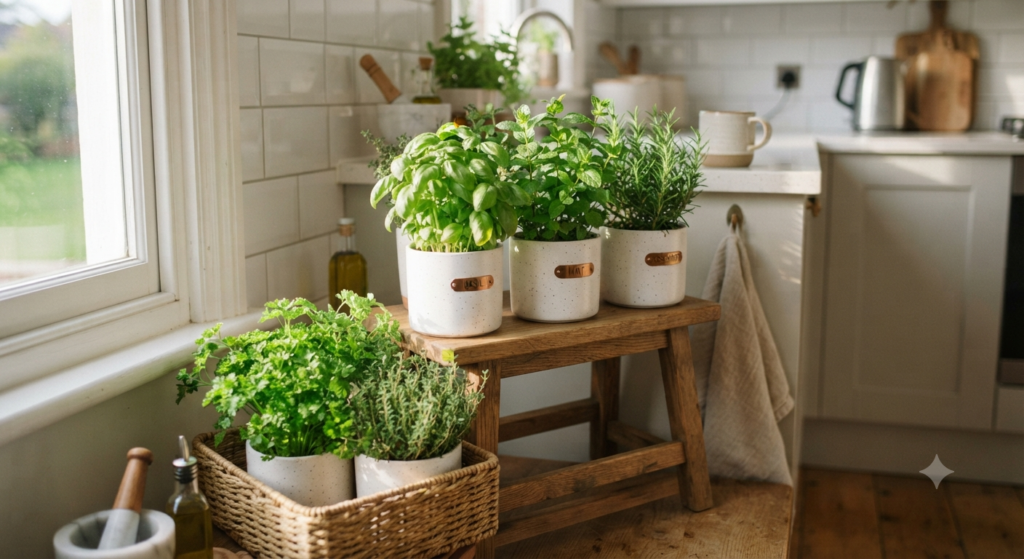
Arrange several small planters on a wooden tray or decorative stand to create an attractive display. This setup works well near bright windows and allows you to move the herbs whenever you need additional sunlight.
A simple countertop herb garden can instantly make your kitchen feel warmer and more inviting.
Floating Shelf Herb Garden Ideas
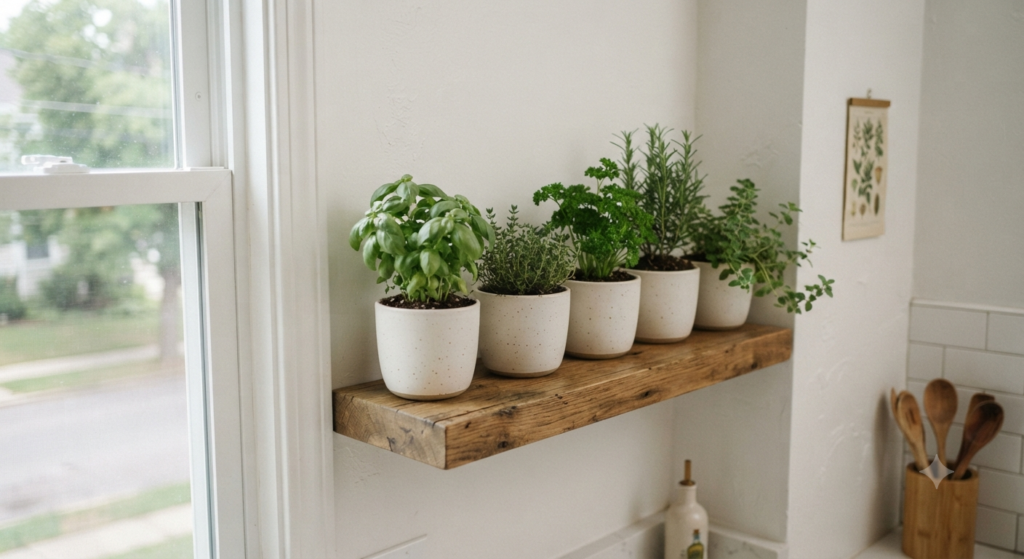
Floating shelves provide a stylish solution for growing herbs indoors without using valuable counter space.
Install sturdy wooden shelves near a bright window and place herbs in matching pots for a modern appearance. Mixing different plant heights and leaf textures creates a balanced display while allowing each herb to receive enough light.
Floating shelves work especially well in kitchens, dining rooms, and home offices where space is limited.
Hanging Indoor Herb Garden Ideas
Hanging planters are a creative way to display herbs while keeping countertops clear.
Small hanging pots filled with trailing herbs such as thyme, oregano, or mint add greenery without taking up floor space. Hang them near bright windows where they receive plenty of indirect or direct sunlight depending on the herb variety.
Natural rope hangers and neutral-colored pots create a relaxed, modern style that complements almost any interior.
Mason Jar Herb Garden Ideas
Mason jars can easily be transformed into charming indoor herb planters.
When using glass containers, be sure to include a drainage solution such as small stones or an inner plastic pot to prevent excess water from collecting around the roots.
Mason jar herb gardens are ideal for windowsills, open shelves, breakfast bars, and small apartment kitchens. They add a simple rustic touch while making fresh herbs part of your everyday living space.
Smart Indoor Herb Garden Systems
Technology has made indoor gardening easier than ever. Smart indoor herb gardens are designed to simplify plant care by providing consistent lighting and watering, making them an excellent option for busy households.
Many systems include built-in LED grow lights, water reservoirs, and automatic timers that help herbs grow throughout the year with minimal maintenance.
They are especially useful for people who:
- Have limited natural sunlight
- Travel frequently
- Are new to gardening
- Want fresh herbs year-round
Even with smart systems, checking your plants regularly helps keep them healthy and productive.
Best Herbs to Grow Indoors
Not every herb grows equally well inside the home. Choosing varieties that naturally adapt to indoor conditions will give you better results.
Some of the best herbs for indoor herb garden ideas include:
- Basil
- Parsley
- Chives
- Mint
- Oregano
- Thyme
- Cilantro
- Rosemary
- Lemon balm
- Sage
Starting with three or four herbs makes indoor gardening easier for beginners.
Choosing the Right Containers
The container you choose has a direct impact on plant health.
Look for pots that:
- Have drainage holes
- Match the size of the herb
- Allow good airflow around the roots
- Are easy to move when needed
Popular choices include ceramic pots, terracotta planters, lightweight plastic containers, and modern self-watering pots.
Selecting matching containers also creates a cleaner and more organized appearance.
Give Herbs Enough Light
Light is one of the most important factors in successful indoor herb gardening.
Most herbs grow best with six to eight hours of bright light each day.
If your home doesn’t receive enough natural sunlight, full-spectrum LED grow lights can provide the light needed for healthy growth.
Place lights at the recommended distance above the plants and adjust them as the herbs grow taller.
Watering Indoor Herbs Correctly
Overwatering is one of the most common reasons indoor herbs fail.
Instead of watering on a fixed schedule, check the soil with your finger. If the top inch feels dry, it’s usually time to water.
Water slowly until excess water drains from the bottom of the pot, then empty any standing water from trays to prevent root problems.
Maintain Comfortable Humidity
Indoor heating and air conditioning can make the air much drier than outdoor conditions.
Some herbs appreciate slightly higher humidity.
You can help by:
- Keeping herbs together in small groups
- Using a pebble tray with water beneath the pots
- Occasionally misting herbs that enjoy extra humidity
- Avoiding placement directly beside heating or cooling vents
Balanced humidity supports healthy leaves and steady growth.
Decorating with Indoor Herb Gardens
An indoor herb garden should be both practical and attractive.
Creative decorating ideas include:
- Matching ceramic pots
- Wooden plant stands
- Floating shelves
- Tiered metal plant racks
- Woven baskets
- Minimalist white planters
- Rustic wooden trays
Using coordinated containers creates a stylish display that blends naturally with modern, farmhouse, or traditional home décor.
Indoor Herb Garden Ideas for Small Apartments
Limited space doesn’t mean you have to give up gardening.
Try these space-saving ideas:
- Windowsill planters
- Wall-mounted herb shelves
- Hanging pots
- Corner plant stands
- Rolling plant carts
- Narrow ladder shelves
These solutions make it possible to grow fresh herbs even in studio apartments or compact kitchens.
Seasonal Indoor Herb Care
Although herbs are indoors, their growth changes with the seasons.
Spring
New growth begins to appear. Feed herbs lightly with compost or organic fertilizer and repot plants that have outgrown their containers.
Summer
Herbs usually grow quickly. Harvest regularly and monitor soil moisture more often during warm weather.
Fall
Growth may slow slightly as daylight hours become shorter. Reduce watering if the soil stays moist longer.
Winter
Provide additional light if needed, avoid overwatering, and keep herbs away from cold windows or heating vents.
Adjusting your care routine with the seasons helps indoor herbs stay healthy throughout the year.
Common Indoor Herb Gardening Mistakes to Avoid
Even easy-to-grow herbs can struggle indoors if they don’t receive the right care. Fortunately, a few simple changes can prevent most common problems.
Avoid these mistakes:
- Placing herbs in dark corners with little natural light.
- Watering on a fixed schedule instead of checking the soil.
- Using containers without drainage holes.
- Growing too many herbs in one small pot.
- Ignoring regular pruning and harvesting.
- Keeping herbs too close to heating or air-conditioning vents.
- Forgetting to rotate pots so each side receives equal sunlight.
By avoiding these common mistakes, your indoor herb garden will stay healthier and produce fresh growth for much longer.
Easy Tips for a Thriving Indoor Herb Garden
Small habits can make a big difference in the health of your herbs.
Follow these simple tips:
- Harvest herbs regularly to encourage new growth.
- Remove yellow or damaged leaves as soon as you notice them.
- Wipe dust from leaves occasionally so they can absorb light more efficiently.
- Turn pots every few days for even growth.
- Feed herbs with a balanced organic fertilizer during active growing seasons.
- Repot plants when roots begin filling the container.
Consistent care helps herbs stay lush, productive, and attractive throughout the year.
Frequently Asked Questions
What herbs grow best indoors?
Basil, parsley, chives, mint, oregano, thyme, rosemary, sage, cilantro, and lemon balm are among the easiest herbs to grow indoors with proper light and care.
How much sunlight do indoor herbs need?
Most herbs need between six and eight hours of bright light every day. If natural sunlight is limited, a full-spectrum LED grow light is an excellent alternative.
How often should indoor herbs be watered?
Rather than watering on a fixed schedule, check the soil regularly. Water when the top inch feels dry, then allow excess water to drain completely.
Can I grow herbs indoors all year?
Yes. With enough light, proper watering, and occasional feeding, many herbs can grow successfully indoors throughout the year.
Final Thoughts
Creating an indoor herb garden is one of the easiest ways to enjoy fresh herbs while adding natural beauty to your home. Whether you choose a sunny windowsill, floating shelves, hanging planters, or a smart indoor growing system, the right indoor herb garden ideas can transform even a small space into a productive and inviting garden.
Start with a few easy herbs, provide plenty of light, and care for them consistently. As your confidence grows, you can expand your collection and experiment with different containers, layouts, and decorative styles. With these indoor herb garden ideas, you can create a beautiful indoor garden that provides fresh herbs, natural greenery, and everyday enjoyment throughout the year.