

Annual flowers are a great way to add quick and beautiful color to your garden. Unlike perennial plants, they usually complete their life cycle in one growing season, but many produce plenty of colorful blooms during that time.
There are many types of annual flowers to choose from, whether you want bright colors, delicate blooms, or flowers that can handle sunny and warm conditions. They can be planted in garden beds, containers, hanging baskets, or along pathways.
With the right flowers and basic care, annuals can make your garden look fresh and colorful throughout the growing season. They are also a fun choice for gardeners who enjoy trying different flowers each year.
What Are Annual Flowers?
Annual flowers are plants that typically grow, bloom, produce seeds, and complete their life cycle within one growing season. Unlike many perennial flowers, they generally do not return from the same plant the following year.
Although they only last for one season, annuals can provide an incredible amount of color. Many varieties bloom for months when they receive enough sunlight, water, and proper care.
Another advantage is the variety available. You can choose different annuals every year and completely change the look of your garden.
25 Stunning Annual Flowers for a Colorful Garden
1. Zinnias
Zinnias are some of the most popular annual flowers for summer gardens. They come in a wide range of colors, including pink, red, orange, yellow, white, and purple.
They love sunshine and can produce flowers throughout the warm growing season. Zinnias are also excellent for attracting butterflies and other pollinators.
Plant them in a sunny location with well-draining soil and remove faded flowers regularly to encourage more blooms.
2. Marigolds
Marigolds are cheerful, easy-to-grow annuals that are perfect for beginners. Their bright yellow, orange, and gold flowers instantly make a garden look more vibrant.
They prefer full sun and well-draining soil. Marigolds work beautifully in flower beds, borders, containers, and vegetable gardens.
3. Petunias
Petunias are a fantastic choice when you want flowers that provide plenty of color.
They are available in numerous shades and can work well in containers, hanging baskets, window boxes, and flower beds.
Give petunias plenty of sunlight and water them when the soil begins to dry. Regularly removing faded blooms can help keep plants looking fresh.
4. Sunflowers
Few flowers create a stronger summer statement than sunflowers.
These tall and cheerful annuals love full sun and can grow surprisingly quickly under the right conditions. Smaller sunflower varieties are also available for containers and compact gardens.
Sunflowers are especially beautiful when planted along fences or at the back of flower beds.
5. Cosmos
Cosmos produce delicate, daisy-like flowers that give gardens a light and airy appearance.
They are available in shades such as pink, white, and red. Cosmos generally prefer sunny locations and can tolerate relatively dry conditions once established.
Their graceful stems also make them excellent cut flowers.
6. Snapdragons
Snapdragons are colorful annual flowers with distinctive blooms that resemble little dragon mouths.
They come in many shades and can add height and structure to flower beds. Depending on the climate and variety, they may perform especially well during cooler parts of the growing season.
Plant them in fertile, well-draining soil and provide adequate sunlight.
7. Sweet Alyssum
Sweet alyssum is a low-growing annual with clusters of tiny flowers and a pleasant fragrance.
It works beautifully along garden edges, pathways, containers, and hanging baskets.
White is especially popular, but pink and purple varieties are also available.
8. Impatiens
If your garden has areas with less direct sunlight, impatiens can be an excellent option.
These colorful flowers are commonly grown in shaded or partly shaded locations. They work well beneath trees, along porches, and in containers.
Keep the soil consistently moist without allowing it to remain waterlogged.
9. Begonias
Begonias are versatile annuals that can brighten shaded and partly shaded areas.
Depending on the variety, they may produce colorful flowers along with attractive foliage. They are particularly useful for containers, patios, and garden borders.
Avoid overwatering and provide good drainage.
10. Celosia
Celosia is known for its unusual, brightly colored flowers.
Some varieties have feathery blooms, while others produce flowers with a crested appearance. Their unique shape makes them stand out among traditional annual flowers.
Celosia generally performs best in warm weather and full sun.
11. Nasturtiums
Nasturtiums are colorful, easy-going flowers that can bring a relaxed cottage-garden feel to outdoor spaces.
Their flowers are available in vibrant shades such as orange, red, and yellow. Some varieties trail beautifully from containers and hanging baskets.
They can also attract pollinators to the garden.
12. Calendula
Calendula produces cheerful yellow and orange flowers and is a wonderful addition to sunny flower beds.
It can perform especially well during cooler parts of the growing season. Deadheading spent flowers can encourage additional blooms.
13. Portulaca
Portulaca, sometimes called moss rose, is an excellent choice for hot and sunny locations.
Its colorful flowers open in bright sunlight and come in shades of pink, red, orange, yellow, and white.
Because it is relatively drought tolerant, portulaca can be useful in low-water gardens and sunny containers.
14. Geraniums
Garden geraniums are popular for containers, window boxes, patios, and flower beds.
Their clusters of flowers can provide strong seasonal color, while their attractive foliage adds additional interest.
Place them in a bright location and avoid keeping the soil constantly wet.
15. Lantana
Lantana produces clusters of small flowers that can display multiple colors on the same plant.
It loves warm weather and sunshine and can be particularly attractive to butterflies.
Lantana can work well in containers as well as sunny landscape beds.
16. Sweet Peas
Sweet peas are loved for their delicate flowers and sweet fragrance.
They can climb supports such as trellises, fences, and garden arches, making them useful for adding vertical interest.
They generally prefer cooler growing conditions than many summer annuals.
17. Ageratum
Ageratum produces fluffy clusters of blue, purple, pink, or white flowers.
Its compact growth makes it useful for borders, containers, and mixed flower beds.
Ageratum looks particularly attractive when planted alongside contrasting yellow or orange flowers.
18. Cleome
Cleome, often called spider flower, creates tall stems topped with unusual flowers and long stamens.
It is a great choice when you want height and movement in a garden.
Plant cleome in a sunny location with well-draining soil.
19. Vinca
Annual vinca is a heat-loving flower that can perform well in warm climates.
Its glossy green foliage and colorful flowers make it a useful choice for sunny containers and flower beds.
Once established, it can tolerate periods of dry weather better than some other annuals.
20. Salvia
Annual salvias produce upright flower spikes that add height and color to garden beds.
Many varieties are attractive to hummingbirds and pollinators.
They can be planted in groups for a bold effect or combined with lower-growing flowers.
21. Pansies
Pansies are colorful annual flowers that are especially popular during cooler seasons.
Their distinctive faces and wide range of colors make them excellent for containers, borders, and flower beds.
In many regions, they can provide color during fall, winter, and early spring.
22. Viola
Violas are smaller relatives of pansies and are available in many beautiful colors.
They are excellent for containers, edging, and smaller garden spaces.
Because they prefer cooler temperatures, they can be especially useful for extending seasonal garden color.
23. Morning Glories
Morning glories are vigorous annual vines known for their beautiful trumpet-shaped flowers.
They can quickly cover trellises, fences, and other supports, making them a good option when you want vertical color.
Provide them with plenty of sunlight and a sturdy structure to climb.
24. Bachelor Buttons
Bachelor buttons produce charming blue, pink, white, and purple flowers.
They are easy to grow and can give gardens a natural, cottage-style appearance.
Their flowers can also be used as cut flowers for simple indoor arrangements.
25. Four O’Clocks
Four o’clocks are interesting annual plants because their colorful, trumpet-shaped flowers often open later in the day.
They can add a different dimension to evening gardens and are available in several vibrant colors.
Plant them where you can enjoy their blooms during late afternoon and evening.
Best Annual Flowers for Full Sun
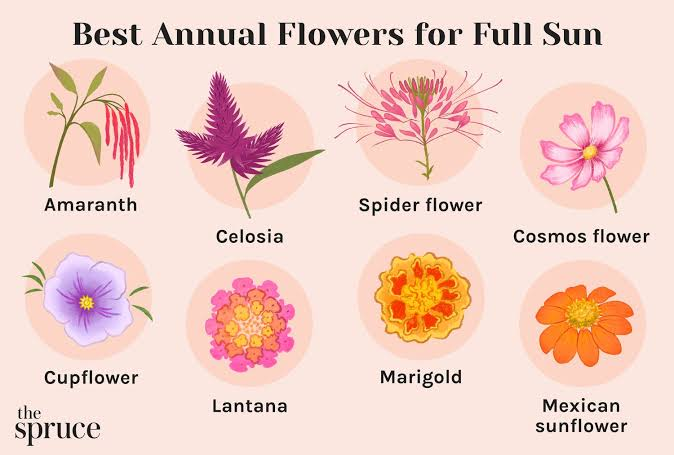
If your garden receives at least several hours of direct sunlight, many annual flowers will thrive.
Some excellent choices include:
- Zinnias
- Marigolds
- Sunflowers
- Petunias
- Cosmos
- Celosia
- Portulaca
- Lantana
- Salvia
- Vinca
- Nasturtiums
Always check the specific variety because sunlight requirements can vary between cultivars.
Best Annual Flowers for Shade
Not every garden receives full sun. Fortunately, several annuals can perform well in partial or filtered shade.
Consider:
- Impatiens
- Begonias
- Torenia
- Browallia
- Some coleus varieties
For shady gardens, choose plants according to the amount of light your space actually receives.
Best Annual Flowers for Containers
Containers are an easy way to enjoy colorful annual flowers without creating a traditional flower bed.
Some excellent container choices include:
- Petunias
- Marigolds
- Zinnias
- Geraniums
- Begonias
- Sweet alyssum
- Portulaca
- Vinca
- Pansies
Choose containers with drainage holes and use a quality potting mix designed for container plants.
How to Care for Annual Flowers
Although annuals are generally easy to grow, proper care can help them produce more flowers and stay healthy.
Give Them Enough Sunlight
Most flowering annuals need plenty of light. Check the requirements of each plant before deciding where to place it.
Water Consistently
Newly planted annuals usually need regular watering while they establish roots. Once established, watering requirements depend on the plant, weather, container size, and soil.
Always avoid keeping the soil constantly soggy.
Deadhead Regularly
Removing faded flowers can encourage many annuals to continue producing new blooms.
Deadheading also keeps flower beds looking cleaner and more attractive.
Feed When Needed
Container-grown annuals may need supplemental nutrients because frequent watering can wash nutrients from the potting mix.
Use a balanced fertilizer according to the product instructions.
Provide Good Airflow
Avoid overcrowding plants. Adequate spacing improves airflow and can reduce some common plant problems.
How to Create a Beautiful Annual Flower Garden
Creating a beautiful garden is not just about choosing individual flowers. Think about how the plants will look together.
Combine different heights, colors, textures, and bloom shapes. Place tall flowers toward the back of a flower bed and shorter plants toward the front.
For example, you could combine tall zinnias with medium-height marigolds and low-growing sweet alyssum.
Repeating the same flower colors throughout the garden can also create a more organized and polished appearance.
Annual Flowers vs. Perennial Flowers
The biggest difference between annuals and perennials is their life cycle.
Annuals typically complete their life cycle within one growing season, while perennials can return for multiple years under suitable growing conditions.
Annuals are ideal if you enjoy changing your garden design every year. Perennials are useful when you want a more permanent landscape.
Many gardeners combine both types to enjoy long-lasting structure with seasonal bursts of color.
Common Mistakes When Growing Annual Flowers
Avoid these common mistakes for healthier plants:
Planting Too Early
Some annuals are sensitive to cold temperatures. Follow local planting recommendations and consider the specific plant’s temperature needs.
Overwatering
Too much water can cause root problems. Make sure containers and garden beds drain properly.
Choosing the Wrong Location
A shade-loving flower may struggle in intense afternoon sun, while a sun-loving annual may become weak in deep shade.
Ignoring Mature Size
Give plants enough space to grow. Overcrowding can reduce airflow and make maintenance more difficult.
Forgetting to Deadhead
Many flowering annuals benefit from regular removal of faded blooms.
FAQs About Annual Flowers
What are the easiest annual flowers to grow?
Zinnias, marigolds, petunias, cosmos, and nasturtiums are popular choices for beginners because they are relatively easy to grow when planted in suitable conditions.
Do annual flowers come back every year?
Most annuals complete their life cycle in one growing season, so they generally do not return from the same plant the following year. However, some may self-seed and produce new plants naturally.
What annual flowers bloom all summer?
Many annuals can bloom for much of the summer when they receive suitable sunlight, water, nutrients, and regular deadheading. Zinnias, petunias, marigolds, and cosmos are popular long-blooming choices.
Final Thoughts
Annual flowers are an easy and beautiful way to bring color and variety to your garden. Since they bloom within one growing season, they are perfect for adding a fresh look or trying new flower combinations each year.
From sunny garden beds to colorful containers and hanging baskets, there are plenty of annuals to suit different spaces and growing conditions. Choosing flowers that match your climate and giving them enough sunlight, water, and care can help them bloom beautifully.
With so many colors and varieties available, annual flowers make it easy to create a garden that feels bright, cheerful, and full of life.