

Growing healthy vegetables starts with using the right fertilizer. The nutrients in your soil directly affect how well your plants grow how much they produce and the quality of your harvest. In this guide you’ll learn about the best fertilizers for vegetable gardens including both organic and synthetic options so you can choose the right one for your garden.
Choosing the right fertilizer depends on your soil the type of vegetables you grow and the nutrients your plants need. Some fertilizers encourage strong root development while others help improve leaf growth, flowering and fruit production. Understanding these differences will help you get healthier plants and a more productive vegetable garden.
Why Fertilizers Matter in Vegetable Gardens
Vegetables are fast-growing plants that require a steady supply of nutrients. Every harvest removes valuable minerals from the soil, and those nutrients must be replaced to keep future crops healthy.
Using the best fertilizers for vegetable gardens helps:
- Promote strong root development
- Encourage healthy leaf growth
- Increase flower and fruit production
- Improve vegetable size and flavor
- Strengthen resistance to pests and diseases
- Support healthy soil over time
A well-fed vegetable garden is generally more productive, easier to maintain, and better able to handle changing weather conditions. Understanding the best fertilizers for vegetable gardens allows you to feed each crop according to its nutritional needs.
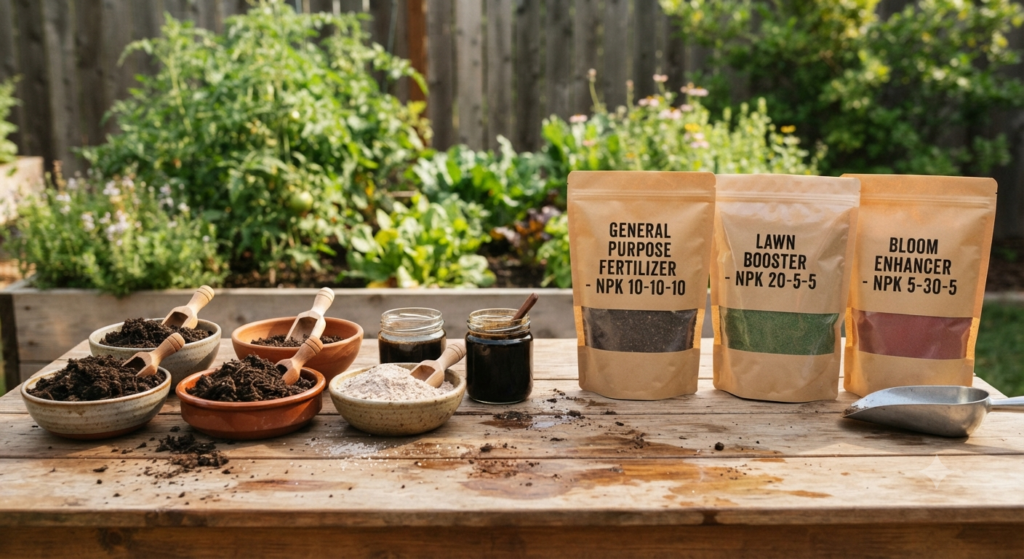
Understanding the Three Main Plant Nutrients (NPK)
Every fertilizer label includes three numbers known as the NPK ratio. These numbers represent the percentage of three essential nutrients that vegetables need.
Nitrogen (N)
Nitrogen encourages vigorous leafy growth and rich green foliage. Leafy vegetables such as lettuce, spinach, kale, and cabbage benefit from fertilizers with higher nitrogen levels.
Phosphorus (P)
Phosphorus supports healthy roots, flower formation, and fruit development. Tomatoes, peppers, cucumbers, and beans all need adequate phosphorus for strong production.
Potassium (K)
Potassium improves overall plant health by strengthening stems, increasing disease resistance, regulating water movement, and improving vegetable quality.
Understanding NPK ratios makes it much easier to select the best fertilizer for each type of vegetable.
Organic vs. Synthetic Fertilizers
One of the biggest decisions gardeners face is choosing between organic and synthetic fertilizers. Both options can be among the best fertilizers for vegetable gardens when they are used correctly and at the right stage of plant growth.
Organic Fertilizers
Organic fertilizers are made from natural materials such as compost, manure, bone meal, fish emulsion, seaweed, and worm castings.
Advantages include:
- Improve soil structure
- Feed beneficial microorganisms
- Release nutrients gradually
- Lower risk of fertilizer burn
- Environmentally friendly
Because nutrients are released slowly, organic fertilizers continue feeding plants over a longer period.
Synthetic Fertilizers
Synthetic fertilizers are manufactured to provide nutrients in precise amounts that plants can absorb quickly.
Benefits include:
- Fast results
- Easy nutrient control
- Consistent nutrient content
- Convenient application
However, excessive use can damage roots, reduce soil biology, and lead to nutrient imbalances if applied incorrectly.
Signs Your Vegetable Garden Needs Fertilizer
Plants often show visible signs when nutrients become limited.
Watch for symptoms such as:
- Pale or yellow leaves
- Slow growth
- Small vegetables
- Weak stems
- Poor flowering
- Reduced harvests
- Purple leaves on young plants
- Early leaf drop
Recognizing these warning signs early allows you to correct nutrient deficiencies before they affect your harvest.
Best Fertilizers for Leafy Vegetables
Leafy vegetables require steady nitrogen to produce lush, tender leaves.
Excellent fertilizer choices include:
- Compost
- Fish emulsion
- Blood meal
- Alfalfa meal
- Balanced organic vegetable fertilizer
Apply fertilizer lightly throughout the growing season rather than adding a large amount all at once. This encourages continuous leaf production without stressing the plants.
Best Fertilizers for Fruiting Vegetables
Tomatoes, peppers, cucumbers, squash, and eggplants need balanced nutrition during different stages of growth.
During early growth, a balanced fertilizer supports healthy stems and leaves. Once flowering begins, fertilizers with slightly higher phosphorus and potassium levels encourage more blossoms and better fruit development.
Avoid applying too much nitrogen after flowering, as it can produce excessive leafy growth with fewer vegetables.
Best Fertilizers for Root Vegetables
Root vegetables such as carrots, beets, radishes, onions, garlic, and turnips have different nutritional needs than leafy greens or fruiting crops. They grow best in loose, fertile soil with balanced nutrients.
Too much nitrogen encourages leafy tops instead of healthy root development. For this reason, gardeners should choose fertilizers that contain moderate nitrogen and adequate phosphorus and potassium.
Good fertilizer choices include:
- Well-aged compost
- Bone meal
- Rock phosphate
- Balanced organic vegetable fertilizer
- Seaweed fertilizer
Applying fertilizer before planting usually provides enough nutrients for most root vegetables throughout their growing season. Selecting the best fertilizers for vegetable gardens helps root vegetables develop stronger roots and better flavor.
Granular vs. Liquid Fertilizers
Gardeners often wonder whether granular or liquid fertilizers produce better results.
The answer depends on your gardening goals.
Granular Fertilizers
Granular fertilizers are spread across the soil surface or mixed into the soil before planting.
Benefits include:
- Slow nutrient release
- Long-lasting feeding
- Fewer applications
- Ideal for raised beds and large gardens
Liquid Fertilizers
Liquid fertilizers are diluted with water and applied directly to the soil or leaves.
- Fast nutrient absorption
- Quick correction of deficiencies
- Easy application with watering cans
- Excellent for container gardens
Many experienced gardeners combine both methods by using granular fertilizer at planting time and liquid fertilizer during active growth.
Slow-Release Fertilizers
Slow-release fertilizers gradually supply nutrients over several weeks or months.
These fertilizers help reduce nutrient loss while providing plants with a steady food source.
Benefits include:
- Less frequent feeding
- Reduced risk of overfertilizing
- More consistent plant growth
- Better nutrient efficiency
Slow-release fertilizers are especially useful for busy gardeners who prefer low-maintenance care.
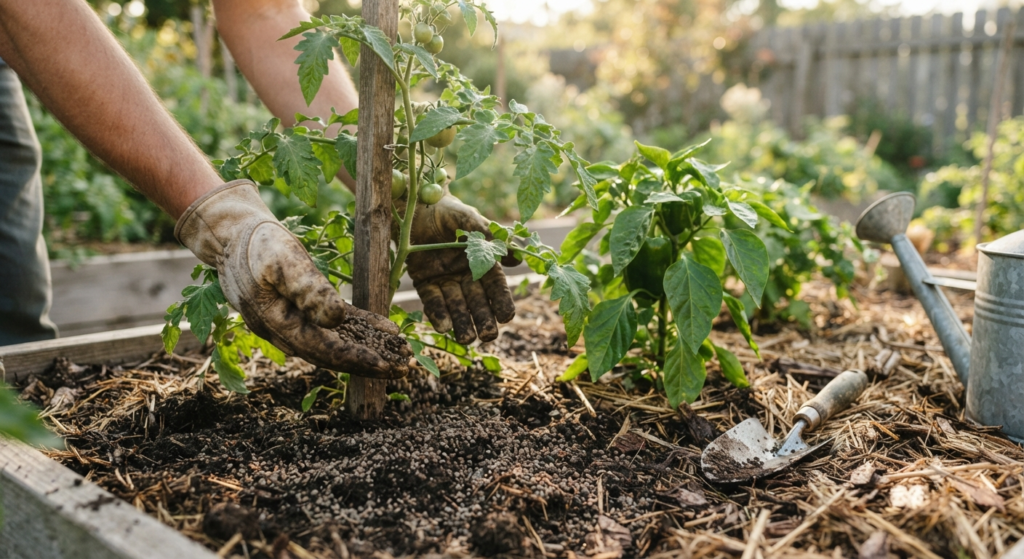
How to Apply Fertilizer Correctly
Even the best fertilizers for vegetable gardens can cause problems if applied incorrectly.
Follow these simple steps:
- Read the fertilizer label carefully.
- Measure the recommended amount.
- Apply fertilizer around the base of plants rather than directly against stems.
- Water thoroughly after applying granular fertilizers.
- Avoid fertilizing during the hottest part of the day.
Applying the correct amount protects plants while maximizing nutrient uptake.
When Should You Fertilize Vegetable Gardens?
Timing is just as important as choosing the right fertilizer.
A simple schedule includes:
Before Planting
Mix compost or a balanced fertilizer into the soil before planting.
Early Growth
Feed vegetables lightly after seedlings become established.
Flowering Stage
Increase phosphorus and potassium for fruiting vegetables such as tomatoes, peppers, and cucumbers.
Mid-Season
Apply additional fertilizer if plants begin slowing down or leaves lose their healthy green color.
Regular feeding throughout the season supports steady growth without overwhelming plants.
Why Soil Testing Matters
Before adding fertilizer, it’s helpful to understand what your soil already contains.
A soil test measures nutrient levels and pH, helping gardeners avoid unnecessary fertilizer applications.
Testing your soil can help you:
- Prevent nutrient deficiencies
- Avoid overfertilizing
- Save money on fertilizer
- Improve long-term soil health
- Choose the right fertilizer formula
Many local agricultural extension offices and garden centers offer affordable soil testing services.
Common Fertilizing Mistakes
Even experienced gardeners occasionally make mistakes when feeding vegetables.
Avoid these common problems:
- Applying too much fertilizer
- Fertilizing dry soil
- Ignoring soil test results
- Choosing the wrong NPK ratio
- Applying fertilizer too close to stems
- Feeding vegetables too late in the season
- Overusing fast-release fertilizers
Correct fertilizer practices encourage healthier plants while reducing waste and environmental impact.
Extra Tips for Maximum Harvest
Small improvements often produce impressive results.
Keep these tips in mind:
- Add compost every growing season.
- Water consistently after fertilizing.
- Remove weeds that compete for nutrients.
- Mulch around vegetables to retain moisture.
- Rotate crops each year.
- Monitor plants for nutrient deficiencies.
- Harvest vegetables regularly to encourage continued production.
Combining proper fertilization with good gardening habits creates stronger plants and higher-quality harvests.
Beginner’s Fertilizing Checklist
If you’re new to vegetable gardening, following a simple routine can help you avoid common mistakes and keep your plants healthy from planting to harvest.
Use this checklist before every growing season:
- Test your soil if possible.
- Choose a fertilizer based on the vegetables you are growing.
- Read the application instructions carefully.
- Water plants before and after applying fertilizer if recommended.
- Feed vegetables during active growth, not just at planting time.
- Watch for signs of nutrient deficiencies.
- Avoid applying more fertilizer than necessary.
- Store fertilizers in a cool, dry place away from children and pets.
A consistent routine will produce healthier plants and better harvests year after year.
Frequently Asked Questions
What is the best fertilizer for vegetable gardens?
There isn’t one fertilizer that works for every garden. The best fertilizers for vegetable gardens depend on your soil, the vegetables you’re growing, and their stage of growth. Many gardeners combine compost with a balanced vegetable fertilizer for reliable results.
Are organic fertilizers better than synthetic fertilizers?
Both have advantages. Organic fertilizers improve soil health over time and release nutrients slowly, while synthetic fertilizers provide nutrients more quickly. Many gardeners use a combination of both to balance immediate plant needs with long-term soil improvement.
How often should I fertilize vegetable plants?
Most vegetables benefit from feeding every few weeks during active growth, but the exact schedule depends on the fertilizer type and the crop. Always follow the manufacturer’s instructions and avoid overfertilizing.
Can too much fertilizer harm vegetables?
Yes. Excess fertilizer can burn roots, reduce flowering and fruit production, and even damage soil health. Applying the correct amount is more effective than using extra fertilizer.
Final Thoughts
Choosing the best fertilizers for vegetable gardens is one of the smartest investments you can make in your garden. Healthy vegetables depend on a steady supply of nutrients, and understanding how different fertilizers work allows you to feed your plants with confidence.
Whether you prefer compost and other organic options or carefully selected synthetic fertilizers, the key is applying the right nutrients at the right time. Combine proper fertilization with healthy soil, regular watering, adequate sunlight, and consistent garden care to enjoy stronger plants and more abundant harvests throughout the growing season.
As you gain experience, you’ll better understand your soil and your crops, making it easier to choose the best fertilizers for vegetable gardens every season. By choosing the best fertilizers for vegetable gardens and following good gardening practices, you can enjoy healthier plants, richer soil, and productive harvests season after season.