

Growing fresh vegetables doesn’t require a large backyard or a traditional garden. With the right approach, container gardening vegetables can thrive on balconies, patios, decks, rooftops, and even sunny apartment windows. This simple gardening method has become increasingly popular because it allows people to enjoy homegrown vegetables regardless of the amount of outdoor space they have.
Container gardening is ideal for beginners because it’s easy to manage, requires less maintenance than large garden beds, and gives gardeners greater control over soil quality, watering, and plant care. Whether you’re hoping to grow juicy tomatoes, crisp lettuce, colorful peppers, or fragrant herbs, containers make it possible to create a productive vegetable garden almost anywhere.
This guide explains everything you need to know about growing container gardening vegetables successfully, from choosing the right pots to selecting the best vegetables and maintaining healthy plants throughout the season.
Why Choose Container Gardening?
Container gardening offers flexibility that traditional gardens often cannot provide.
Instead of depending on a permanent garden bed, containers allow you to move plants whenever they need more sunlight, protection from harsh weather, or better growing conditions.
Some of the biggest advantages include:
- Perfect for apartments and small homes
- Easy to maintain
- Better control over soil quality
- Fewer weed problems
- Improved drainage
- Easy to move plants
- Ideal for beginners
- Suitable for patios, balconies, and rooftops
These benefits make container gardening vegetables an excellent choice for gardeners with limited outdoor space.
Choosing the Right Containers
The success of your vegetable garden starts with selecting suitable containers.
Vegetables need enough room for healthy root development, so choosing containers that match the size of each plant is essential.
Popular options include:
- Plastic pots
- Terracotta pots
- Ceramic containers
- Wooden planters
- Fabric grow bags
- Metal raised containers
Whatever container you choose, make sure it has drainage holes to prevent excess water from damaging the roots.
Picking the Best Potting Mix
One of the most common mistakes beginners make is filling containers with ordinary garden soil.
Garden soil becomes compact inside containers and often drains poorly, making it difficult for roots to grow.
Instead, choose a high-quality potting mix that is:
- Light and airy
- Rich in organic matter
- Well-draining
- Moisture-retentive
- Suitable for vegetables
Adding compost to the potting mix can improve both fertility and moisture retention.
Best Vegetables for Container Gardening
Many vegetables grow surprisingly well in containers.
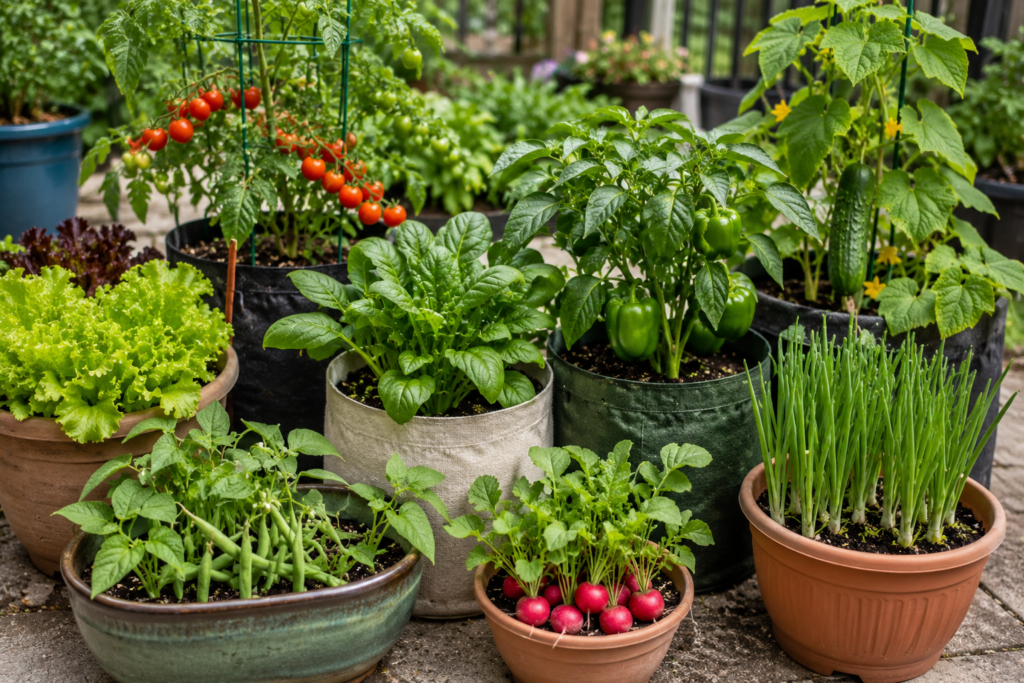
Some of the easiest container gardening vegetables include:
- Tomatoes
- Peppers
- Lettuce
- Spinach
- Radishes
- Green onions
- Bush beans
- Cucumbers
- Kale
- Swiss chard
Choose compact or dwarf varieties whenever possible, especially if you’re gardening on a balcony or patio.
Select the Right Location
Even the healthiest vegetable plants cannot produce well without enough sunlight.
Most container gardening vegetables need at least six to eight hours of direct sunlight each day.
South-facing patios, balconies, and sunny decks usually provide the best growing conditions.
If your containers receive uneven sunlight, rotate them every few days so plants grow evenly on all sides.
Watering Container Vegetables
Vegetables growing in containers dry out faster than those planted in the ground.
During warm weather, you may need to water once or even twice a day, depending on the size of the container and the type of vegetable.
Instead of following a strict watering schedule, check the soil regularly. If the top inch feels dry, it’s usually time to water.
Water deeply until moisture drains through the bottom of the container, ensuring the roots receive enough hydration.
Fertilizing Container Gardening Vegetables
Unlike vegetables growing in the ground, potted plants use up nutrients more quickly. Regular feeding keeps plants healthy and encourages continuous growth.
For the best results, use organic fertilizers such as:
- Compost
- Worm castings
- Fish emulsion
- Seaweed fertilizer
- Organic vegetable plant food
Apply fertilizer according to the product instructions and avoid overfeeding, which can produce excessive leaves instead of vegetables.
Support Climbing Vegetables
Some vegetables naturally grow upward and need support to stay healthy.
Tomatoes, cucumbers, pole beans, and certain pea varieties benefit from sturdy supports that keep stems upright and improve air circulation.
Useful support options include:
- Tomato cages
- Bamboo stakes
- Wooden trellises
- Metal plant supports
- Garden twine
Supporting plants also makes harvesting easier and helps prevent fruit from touching the soil.
Mulching Container Plants
Mulch isn’t just for large gardens. A thin layer of organic mulch on top of your containers helps maintain consistent soil moisture and reduces evaporation during hot weather.
Good mulch choices include:
- Straw
- Shredded leaves
- Pine bark
- Coconut coir
- Fine wood chips
Mulch also helps keep container soil cooler during the summer months.
Common Problems with Container Gardening Vegetables
Even well-maintained container gardens can experience occasional challenges.
Some common problems include:
Yellow Leaves
Often caused by overwatering, poor drainage, or nutrient deficiencies.
Wilting Plants
Usually the result of underwatering, extreme heat, or containers that are too small.
Slow Growth
Can occur if plants receive insufficient sunlight or nutrients.
Root-Bound Plants
When roots completely fill a container, plants stop growing efficiently. Move them into a larger pot if possible.
Regular observation allows you to solve small issues before they become serious.
Protect Your Vegetable Plants from Pests
Container gardens generally experience fewer pests than traditional gardens, but insects can still appear.
Natural pest control methods include:
- Inspecting leaves every few days
- Removing damaged foliage
- Spraying neem oil when necessary
- Using insecticidal soap
- Encouraging beneficial insects
- Keeping containers clean and weed-free
Healthy plants are naturally more resistant to pests and diseases.
Harvest Vegetables Regularly
Frequent harvesting encourages many vegetables to continue producing.
Pick vegetables when they reach their ideal size instead of waiting too long.
For example:
- Harvest lettuce leaves while they’re young and tender.
- Pick cucumbers before they become oversized.
- Collect beans every few days.
- Harvest tomatoes after they develop full color.
Regular harvesting improves both flavor and productivity.
Grow More in Less Space
One of the greatest advantages of container gardening vegetables is making the most of limited space.
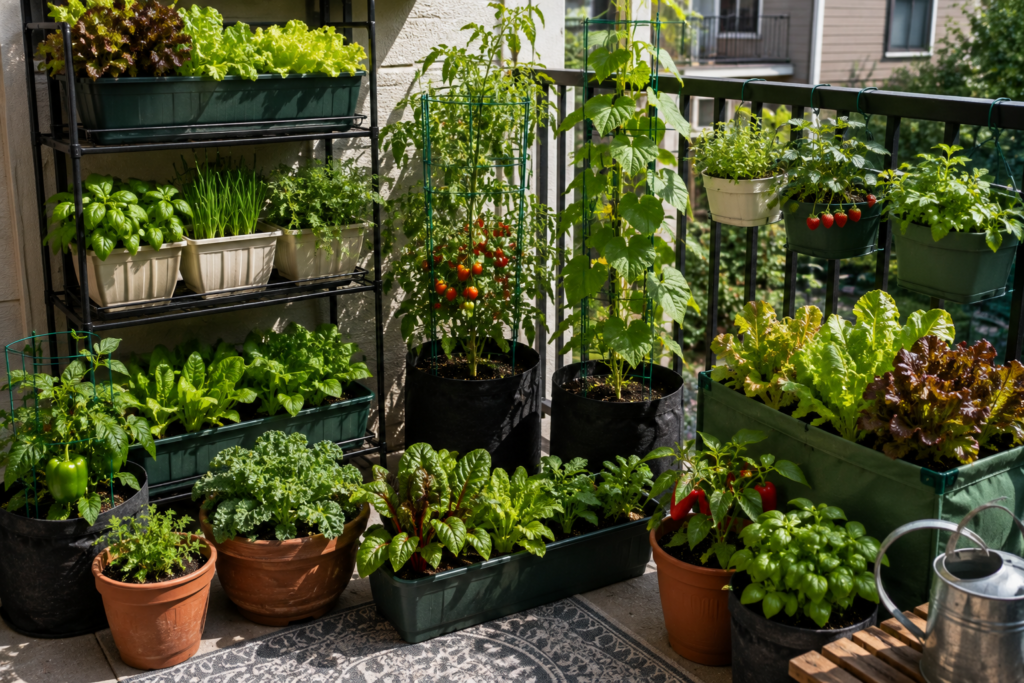
Try these space-saving ideas:
- Use tiered plant stands.
- Install vertical planters.
- Hang lightweight containers.
- Grow climbing vegetables upward.
- Combine herbs with vegetables.
- Place containers along railings or fences.
Creative planning allows even small balconies and patios to produce an impressive harvest.
Seasonal Care for Container Gardens
Different seasons require different care routines.
Spring
Prepare fresh potting mix, fertilize lightly, and begin planting after the risk of frost has passed.
Summer
Water more frequently, monitor for pests, and harvest vegetables regularly.
Fall
Continue harvesting cool-season vegetables and remove finished plants.
Winter
Clean containers thoroughly, store unused pots in a protected location, and prepare supplies for the next growing season.
Taking care of your containers throughout the year makes future planting seasons easier and more productive.
Common Mistakes to Avoid
Growing container gardening vegetables is simple, but a few common mistakes can reduce your harvest. Paying attention to the basics will help your plants stay healthy and productive throughout the season.
Avoid these mistakes:
- Using containers without drainage holes
- Choosing pots that are too small for mature plants
- Filling containers with heavy garden soil instead of quality potting mix
- Watering too often or letting the soil dry out completely
- Forgetting to fertilize regularly
- Placing containers in areas with insufficient sunlight
- Crowding too many vegetables into one pot
- Ignoring early signs of pests or diseases
Correcting these small issues early can make a noticeable difference in plant growth and harvest quality.
Helpful Tips for Bigger Harvests
If you want to get the most from your container garden, focus on consistency rather than complicated techniques.
Simple habits that make a difference include:
- Water deeply instead of lightly sprinkling the soil.
- Feed plants with organic fertilizer during the growing season.
- Remove dead or damaged leaves regularly.
- Rotate containers for even sunlight exposure.
- Harvest vegetables as soon as they are ready.
- Keep containers clean to reduce disease problems.
- Add fresh compost when replanting each season.
These everyday practices help container-grown vegetables stay vigorous and continue producing for longer.
Frequently Asked Questions
What vegetables grow best in containers?
Tomatoes, peppers, lettuce, spinach, cucumbers, bush beans, radishes, kale, Swiss chard, and green onions are among the easiest vegetables to grow in containers.
How often should I water container gardening vegetables?
Container-grown vegetables usually need more frequent watering than plants grown in the ground. Check the soil daily and water when the top inch feels dry. During hot summer weather, some containers may need watering twice a day.
Can I use regular garden soil in containers?
No. Garden soil becomes compact in containers and does not drain well. A high-quality potting mix designed for vegetables provides better drainage, airflow, and root development.
Do container vegetables need fertilizer?
Yes. Since nutrients wash out of containers more quickly, regular feeding with compost or an organic vegetable fertilizer helps maintain healthy growth and supports continuous harvests.
Final Thoughts
Growing container gardening vegetables is an easy and rewarding way to enjoy fresh produce, even if you have only a balcony, patio, rooftop, or small outdoor space. With the right containers, nutrient-rich potting mix, regular watering, and proper sunlight, almost anyone can grow healthy vegetables at home.
Start with a few reliable crops, learn from each growing season, and gradually expand your garden as your confidence grows. Whether you’re harvesting crisp lettuce for salads or juicy tomatoes for homemade meals, container gardening makes fresh, homegrown vegetables accessible to gardeners of every skill level.