

Dogwood trees are a beautiful addition to any garden, especially when they bloom in spring and add a lovely touch of color to the landscape. They are fairly easy to care for, but giving them the right amount of sunlight, water, and healthy soil can make a big difference in their growth.
In this guide, I’ll cover the basic dogwood tree care tips you need to know, including watering, sunlight, soil, pruning, and common problems. With a little regular care, your dogwood tree can stay healthy and look beautiful throughout the seasons.
What is a Dogwood Tree?
Dogwood is the common name for several species and cultivars of trees and shrubs in the genus Cornus. Some are grown primarily as ornamental landscape plants because of their attractive flowers, foliage, bark, or berries.
Flowering dogwoods are particularly popular in residential landscapes. Depending on the variety, dogwoods can provide beautiful spring displays followed by green summer foliage and attractive seasonal color.
Before planting, identify the exact dogwood variety you have because mature size, sunlight preferences, hardiness, and care requirements can vary.
Choosing the Right Location for a Dogwood Tree
Choosing a suitable planting location is one of the most important parts of successful dogwood tree care.
Dogwoods generally perform well in locations with good drainage and protection from harsh environmental conditions. Many varieties appreciate morning sunlight and some afternoon shade, particularly in warmer climates.
Avoid planting your tree in a location where water regularly collects. Poor drainage can create unhealthy root conditions.
You should also consider the tree’s mature size. Give it enough room to grow without interfering with buildings, power lines, sidewalks, or other large plants.
Good dogwood tree care starts with choosing a location that provides suitable sunlight, drainage, and enough room for healthy growth.
How Much Sunlight Does a Dogwood Tree Need?
Sunlight requirements depend on the dogwood species and your local climate.
Many flowering dogwoods grow well with morning sun and partial afternoon shade. In hotter regions, some protection from intense afternoon sunlight can help reduce heat stress.
In cooler climates, a location with more sunlight may be suitable if soil moisture is adequate.
Observe your yard before planting and choose a location that provides the light conditions recommended for your specific variety.
Providing the right amount of sunlight is an important part of dogwood tree care.
Best Soil for Dogwood Trees
Dogwoods generally prefer fertile, well-draining soil with good organic matter.
Soil that is too compacted can restrict root growth and drainage. Before planting, loosen compacted soil and improve it when necessary.
A soil test can also help you understand the existing soil conditions and whether amendments are needed.
Avoid making major soil changes without understanding what your particular dogwood requires. Good structure, drainage, and appropriate moisture are usually more important than simply adding large amounts of fertilizer.
How to Plant a Dogwood Tree
Planting correctly gives your dogwood a strong start.
Choose a healthy tree from a reputable nursery and plant it during an appropriate season for your region.
Dig a planting hole that is wide enough to accommodate the root system without unnecessarily burying the tree too deeply.
The top of the root ball should be positioned appropriately in relation to the surrounding soil. Avoid burying the trunk.
After planting, water the area thoroughly and apply a layer of mulch around the root zone.
Keep mulch away from direct contact with the trunk.
How Often Should You Water a Dogwood Tree?
Watering is an important part of dogwood tree care, especially during the first few years after planting.
Newly planted trees need consistent moisture while their root systems become established. However, the soil should not remain saturated.
During hot or dry weather, check the soil regularly and water deeply when necessary.
Established dogwoods may require less supplemental irrigation, although they can still benefit from watering during prolonged periods of drought.
The exact watering frequency depends on soil type, rainfall, temperature, tree age, and local climate.
How to Water a Dogwood Tree Properly
When watering, apply water slowly to the soil around the tree’s root zone rather than repeatedly wetting only the trunk.
Deep watering encourages moisture to reach the root area.
Avoid frequent shallow watering when possible because it can encourage a shallow root system.
A layer of organic mulch can help conserve soil moisture and moderate soil temperature.
Mulching Around Dogwood Trees
Mulch can be very helpful for maintaining healthy soil conditions.
Organic materials such as shredded bark, wood chips, or composted mulch can help retain moisture and reduce competition from weeds.
Spread mulch around the root zone while leaving space around the trunk.
A common mistake is creating a thick mound of mulch directly against the trunk. This can trap moisture and create conditions that encourage decay and other problems.
Fertilizing a Dogwood Tree
Dogwoods generally benefit more from appropriate soil conditions than from excessive fertilizer.
If your tree is growing normally and has healthy foliage, heavy fertilization may not be necessary.
If growth appears weak or nutrient deficiencies are suspected, consider testing the soil before applying fertilizer.
Use a fertilizer appropriate for trees and follow the product instructions carefully.
Avoid applying excessive nitrogen because rapid, weak growth may create additional problems.
When Should You Prune a Dogwood Tree?
Pruning should be done thoughtfully because unnecessary cuts can stress the tree and create opportunities for pests or diseases.
Remove dead, damaged, or diseased branches when needed.
If structural pruning is necessary, make clean cuts and avoid removing large amounts of healthy growth at once.
The best pruning time can vary depending on the dogwood species and the reason for pruning, so identify your tree before undertaking major pruning.
How to Prune a Dogwood Tree
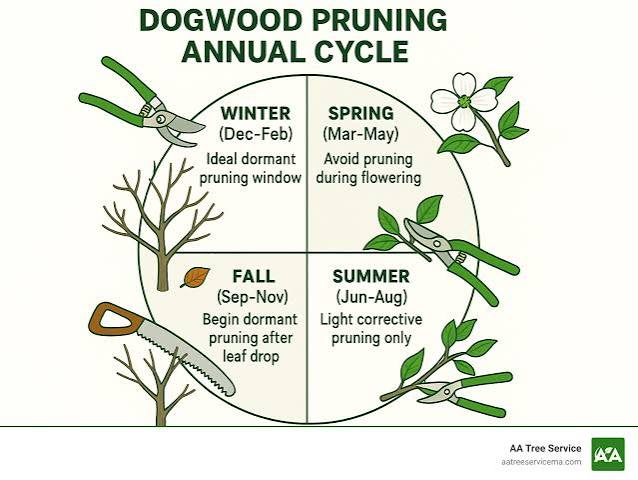
Start by inspecting the tree and identifying branches that are dead, damaged, crossing, or growing in an undesirable direction.
Use clean, sharp pruning tools.
Make proper pruning cuts just outside the branch collar rather than leaving large stubs.
Avoid topping the tree or cutting branches indiscriminately.
For young trees, thoughtful structural pruning can help establish a strong framework. Older trees may require more careful assessment before significant pruning.
Dogwood Tree Care in Spring
Spring is one of the most beautiful seasons for many dogwood varieties.
As temperatures rise, monitor the tree for new growth and signs of stress.
Apply fresh mulch if necessary, but avoid placing it against the trunk.
Check soil moisture and provide water during unusually dry conditions.
Spring can also be a good time to inspect the tree carefully for damaged branches, unusual spots, insects, or other signs of problems.
Dogwood Tree Care in Summer
Summer care is largely focused on moisture, heat, and general tree health.
During hot weather, monitor the soil more frequently, especially if your tree is young or recently planted.
Provide deep watering when the soil becomes too dry.
Mulch can help reduce moisture loss from the soil.
If the tree is exposed to intense heat, signs such as wilting or scorched foliage may indicate environmental stress.
Dogwood Tree Care in Fall
Fall can bring attractive foliage and berries, depending on the variety.
Continue monitoring soil moisture, especially if rainfall is limited.
Remove damaged branches when appropriate and keep the area around the tree reasonably free of competing weeds.
Fallen leaves can be left in the landscape when appropriate or added to compost, provided they are healthy and free from significant disease.
Dogwood Tree Care in Winter
Winter care depends heavily on the variety and local climate.
Young trees may need additional protection from harsh conditions, particularly in areas with severe winter weather.
Avoid excessive pruning during stressful weather conditions unless a damaged branch creates an immediate safety concern.
In colder areas, maintaining an appropriate mulch layer can help protect the root zone from extreme temperature fluctuations.
Common Dogwood Tree Problems
Even healthy dogwoods can occasionally experience pests, diseases, or environmental stress.
Recognizing problems early can make them easier to manage.
Watch for changes in leaf color, unusual spots, wilting, damaged bark, weak growth, or abnormal branches.
The cause is not always obvious, so consider sunlight, watering, drainage, soil conditions, weather, and recent maintenance practices before treating a problem.
Dogwood Anthracnose
Anthracnose is a fungal disease that can affect some dogwood species, particularly under cool and wet conditions.
Symptoms may include leaf spots, dead areas on leaves, and damage to young branches.
Improving air circulation, reducing unnecessary leaf wetting, removing severely affected material, and choosing resistant varieties where appropriate can help reduce disease pressure.
If you suspect a serious disease, local extension services or a qualified arborist can help with identification and management.
Powdery Mildew on Dogwoods
Powdery mildew can appear as a white, powdery coating on leaves.
It is often associated with conditions that favor fungal development, particularly when air circulation is poor.
Give trees adequate space and avoid unnecessarily crowding them with other plants.
Selecting resistant varieties can also be helpful.
Dogwood Pests
Various insects can occasionally affect dogwoods.
Possible pests include borers, scale insects, aphids, and other insects depending on the species and region.
Regularly inspect leaves, branches, and bark for unusual activity.
Healthy trees are generally better able to tolerate minor pest pressure, so proper watering, suitable planting conditions, and good overall care are important.
Why Are My Dogwood Leaves Turning Brown?
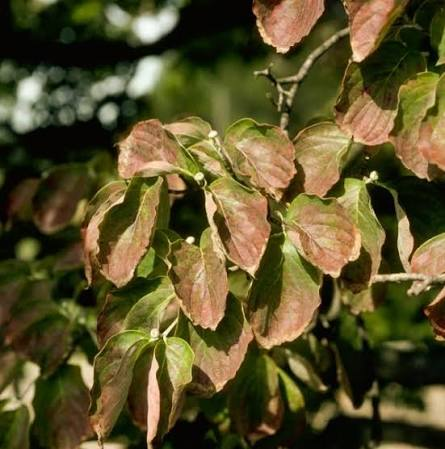
Brown leaves can have several causes.
Heat stress, drought, excessive sunlight, root problems, disease, and poor soil conditions can all contribute to browning.
First check the soil moisture and drainage.
If the tree has been exposed to unusually hot or dry weather, environmental stress may be contributing to the problem.
Do not immediately assume that brown leaves are caused by a single disease.
Why Is My Dogwood Not Flowering?
A dogwood may fail to flower for several reasons.
The tree may be too young, receive unsuitable light, experience environmental stress, or have been affected by pruning at an inappropriate time.
Excessive nitrogen can also encourage leafy growth at the expense of flowering.
Check the tree’s growing conditions and identify the specific variety before making major changes.
How to Keep a Dogwood Tree Healthy
Healthy dogwood tree care starts with prevention.
Choose the right location, provide appropriate moisture, maintain good drainage, avoid damaging the trunk, and monitor the tree regularly.
Do not overfertilize or overwater simply because you want faster growth.
Trees generally benefit from consistent care rather than sudden changes in their growing environment.
Can You Grow a Dogwood Tree in a Small Yard?
Yes, but variety selection is important.
Some dogwoods remain relatively compact, while others can become much larger.
Choose a variety that fits the mature size of your available space.
Before planting, check its expected height and spread and make sure there is enough room for healthy root and canopy development.
How Fast Do Dogwood Trees Grow?
Growth rate varies by species, cultivar, climate, soil, and growing conditions.
Some dogwoods grow relatively slowly compared with larger landscape trees.
Providing appropriate water, light, soil, and space can help the tree reach its natural growth potential.
Avoid excessive fertilizer in an attempt to make the tree grow faster.
Dogwood Tree Care for New Gardeners
Dogwoods can be a good choice for gardeners who want an ornamental tree but do not want an extremely demanding plant.
The most important habits are simple: choose the right location, water appropriately, protect the root zone with suitable mulch, monitor for problems, and prune only when necessary.
Once established, a healthy dogwood can provide years of seasonal interest.
Frequently Asked Questions About Dogwood Tree Care
How often should I water a dogwood tree?
Newly planted dogwoods need regular moisture while they establish roots. Established trees generally need less supplemental watering, but they may require additional water during prolonged dry periods.
Does a dogwood tree need full sun?
Many dogwoods perform well with morning sun and partial shade, although requirements vary by species and climate. Check the recommendations for your specific variety.
What is the best soil for a dogwood tree?
Dogwoods generally prefer fertile, well-draining soil with good organic matter. Avoid heavily compacted or poorly drained locations.
Should I mulch around my dogwood tree?
Yes. A suitable layer of organic mulch can help conserve moisture and moderate soil temperature. Keep mulch away from direct contact with the trunk.
When should I prune a dogwood tree?
Remove dead or damaged branches when necessary, but the ideal timing for major pruning depends on the dogwood species and the purpose of pruning.
Why are my dogwood leaves turning brown?
Brown foliage can result from drought, heat, excessive sunlight, poor drainage, disease, or other environmental stress. Check the tree’s overall growing conditions before deciding on treatment.
Can dogwood trees grow in containers?
Some compact dogwood varieties may be grown in containers for a period of time, but container size, drainage, climate, and mature plant size must be considered carefully.
Are dogwood trees difficult to care for?
With the right location and consistent watering and maintenance, many dogwoods are relatively manageable. Their needs can vary depending on the species and local climate.
Final Thoughts
Taking care of a dogwood tree is not too difficult when you give it the right growing conditions. Regular watering, suitable soil, enough sunlight, and occasional pruning can help the tree stay healthy and strong.
With a little attention throughout the year, a dogwood tree can become a beautiful part of your garden and reward you with attractive blooms and seasonal color.