

Choosing the right plants can make gardening much easier, especially in areas where water is limited or the weather stays hot and dry. Drought tolerant plants are a great choice because they can survive with less water once they are properly established. They are not only practical but can also add beautiful colors, textures, and greenery to your garden.
Whether you have a sunny backyard, a small garden, or simply want to reduce your water use, there are many drought tolerant plants to choose from. In this guide, we’ll look at some of the best drought tolerant plants and share helpful tips for growing them successfully while keeping your garden healthy and attractive.
What Are Drought Tolerant Plants?
Drought tolerant plants are plants that can survive and continue growing during periods of limited water.
Many have natural adaptations that help them conserve moisture. Some have thick leaves, deep roots, small leaves, waxy surfaces, or other characteristics that reduce water loss.
Drought tolerance varies from plant to plant. A species that performs well with little irrigation in Arizona may still need supplemental water in another region during an unusually hot or dry summer.
This is why it is important to choose plants suited to your local climate, soil, and growing conditions.
23 Best Drought Tolerant Plants for Your Garden
1. Lavender
Lavender is a popular choice for water-wise gardens because it prefers well-drained soil and generally does not like constantly wet roots.
Its fragrant foliage and purple flowers make it attractive for borders, pathways, containers, and herb gardens.
Once established, lavender can tolerate relatively dry conditions, particularly when planted in a sunny location with excellent drainage.
Avoid overwatering because consistently wet soil can cause root problems.
2. Rosemary
Rosemary is both ornamental and useful in the kitchen.
Its needle-like leaves help reduce moisture loss, and established plants can tolerate dry conditions.
Plant rosemary in full sun and well-draining soil.
It works beautifully in herb gardens, containers, Mediterranean-style landscapes, and sunny borders.
3. Yarrow
Yarrow is a hardy perennial that produces clusters of small flowers.
Depending on the variety, flowers may appear in white, yellow, pink, or other shades.
It can tolerate dry conditions once established and is useful for pollinator-friendly landscapes.
Yarrow prefers plenty of sunlight and well-drained soil.
4. Coneflower
Coneflower, especially purple coneflower, is a popular perennial for sunny gardens.
Its daisy-like flowers attract pollinators and add long-lasting color during the growing season.
Established plants can tolerate periods of dryness, making them useful for lower-water landscapes.
5. Black-Eyed Susan
Black-eyed Susan produces cheerful yellow flowers with dark centers.
It is widely used in perennial borders, native-inspired gardens, and pollinator spaces.
Once established, it can tolerate periods of dry weather, although prolonged drought may still require supplemental irrigation.
6. Russian Sage
Russian sage is valued for its silvery foliage and airy purple-blue flowers.
It performs particularly well in sunny locations with well-drained soil.
Its silvery foliage gives gardens a soft appearance while its drought tolerance makes it suitable for water-conscious landscapes.
Avoid planting it in areas where soil stays wet.
7. Sedum
Sedums include many succulent plants with thick leaves that store water.
Different varieties range from low-growing ground covers to upright flowering plants.
They are excellent choices for rock gardens, containers, borders, and areas where irrigation is limited.
Sedums generally prefer plenty of sunlight and excellent drainage.
8. Agave
Agaves are iconic drought-tolerant plants with architectural foliage.
Their thick leaves allow them to store water, making them especially suitable for dry landscapes.
Many agaves prefer full sun and sandy or rocky, well-drained soil.
Some varieties can become quite large, so check the mature size before planting.
9. Aloe Vera
Aloe vera is a succulent known for its thick, water-storing leaves.
It can be grown outdoors in suitable warm climates or indoors in containers.
Aloe vera prefers bright light and well-draining soil.
Because it stores water in its leaves, allowing the soil to dry between waterings is generally better than keeping it constantly wet.
10. Lantana
Lantana produces colorful clusters of flowers and can perform well in warm climates.
It is popular for attracting butterflies and adding bright color to sunny landscapes.
Once established, lantana can tolerate periods of dry weather.
Gardeners should check local recommendations because some lantana species or cultivars can behave invasively in certain areas.
11. Bougainvillea
Bougainvillea is a colorful flowering plant commonly associated with warm climates.
It thrives in sunny conditions and well-drained soil.
Once established, it can tolerate relatively dry conditions.
In colder parts of the United States, it may need to be grown as a container plant and protected from freezing temperatures.
12. California Poppy
California poppy is a colorful flowering plant that is well adapted to dry conditions in its native range.
Its bright flowers can bring orange, yellow, and other warm tones to a landscape.
It performs best with plenty of sunlight and well-drained soil.
13. Blanket Flower
Blanket flower produces vibrant red, yellow, and orange blooms.
It is valued for its ability to tolerate heat and relatively dry conditions once established.
It can be an excellent addition to sunny borders and pollinator gardens.
14. Ornamental Grasses
Several ornamental grasses can perform well in water-wise landscapes.
Options vary by region, so choose species appropriate for your local climate.
Ornamental grasses can add movement, height, and texture while reducing the need for plants that require consistently moist soil.
Always check whether a particular grass is considered invasive in your area.
15. Juniper
Junipers include evergreen shrubs and ground covers that can be useful in low-water landscapes.
Once established, many varieties tolerate dry conditions well.
They can provide year-round structure and work well on slopes, borders, and foundation plantings.
Select a variety based on mature height, width, and local climate.
16. Creeping Thyme
Creeping thyme is a low-growing plant that can be used around pathways, rock gardens, and between stepping stones.
It prefers sunny conditions and well-drained soil.
Once established, it can tolerate periods of dryness and requires relatively little maintenance.
17. Catmint
Catmint produces attractive purple-blue flowers and aromatic foliage.
It is a useful perennial for sunny borders and pollinator gardens.
Once established, catmint can handle dry conditions relatively well, particularly in well-draining soil.
18. Daylilies
Daylilies are adaptable perennials that can handle a range of growing conditions.
Although they perform best with adequate moisture during establishment and active growth, established plants can tolerate periods of drought.
They are available in many flower colors and sizes.
19. California Lilac
California lilac, commonly known as Ceanothus, includes shrubs valued for their clusters of blue flowers.
Many varieties are adapted to dry climates and can be excellent choices for water-wise landscapes.
Choose a species or cultivar appropriate for your local region because hardiness and water requirements vary.
20. Texas Sage
Texas sage is a popular drought-tolerant shrub for warm, dry regions.
Its silvery foliage and purple flowers can create an attractive contrast in desert and Southwestern landscapes.
It performs best in full sun and well-drained soil.
21. Prickly Pear Cactus
Prickly pear cactus is well adapted to dry environments.
Its flat, fleshy pads store water, allowing the plant to survive extended dry periods once established.
It can add an interesting architectural element to rock gardens and desert-style landscapes.
Use caution when planting because many varieties have sharp spines.
22. Yucca
Yucca plants are recognized for their sword-shaped leaves and dramatic flower spikes.
They are excellent candidates for dry landscapes and can tolerate heat and limited irrigation once established.
Different species have different sizes and hardiness levels, so select one appropriate for your region.
23. Portulaca
Portulaca, sometimes called moss rose, is a colorful flowering plant that performs well in hot, sunny conditions.
Its succulent-like foliage helps it handle dry conditions.
It can be particularly useful for containers, rock gardens, borders, and areas where frequent watering is inconvenient.
Best Drought Tolerant Plants for Hot and Dry Areas
Gardeners in hot, dry regions often need plants that can handle intense sunlight and limited rainfall.
Some popular options include:
- Agave
- Yucca
- Prickly pear
- Texas sage
- Lavender
- Rosemary
- Sedum
- California poppy
- Russian sage
These plants can be particularly useful in water-conscious landscapes, but local climate and soil conditions still matter.
Drought Tolerant Plants for Full Sun
Most drought-tolerant plants perform best when they receive plenty of sunlight.
Good choices for sunny areas include:
- Lavender
- Rosemary
- Coneflower
- Black-eyed Susan
- Yarrow
- Lantana
- Sedum
- Russian sage
- Blanket flower
- California poppy
When designing a full-sun garden, group plants according to their water requirements.
This prevents you from accidentally giving water-loving plants too little moisture simply because they are planted beside drought-tolerant varieties.
Drought Tolerant Plants for Containers
Containers can dry out faster than garden soil, particularly during hot weather.
Good choices include:
- Sedum
- Aloe vera
- Lavender
- Rosemary
- Portulaca
- Creeping thyme
- Smaller agave varieties
Choose containers with drainage holes and use a well-draining growing medium.
Even drought-tolerant plants may need regular watering when they are growing in containers because their roots have access to a limited amount of soil.
Drought Tolerant Plants for a Low-Water Landscape
A low-water landscape does not have to look dry or boring.
Combine plants with different shapes, colors, heights, and textures.
For example, you can combine:
Tall: Yucca or ornamental grasses
Medium: Russian sage or coneflower
Low-growing: Sedum or creeping thyme
Colorful: Blanket flower or California poppy
This creates visual variety while keeping water requirements relatively low.
How to Establish Drought Tolerant Plants
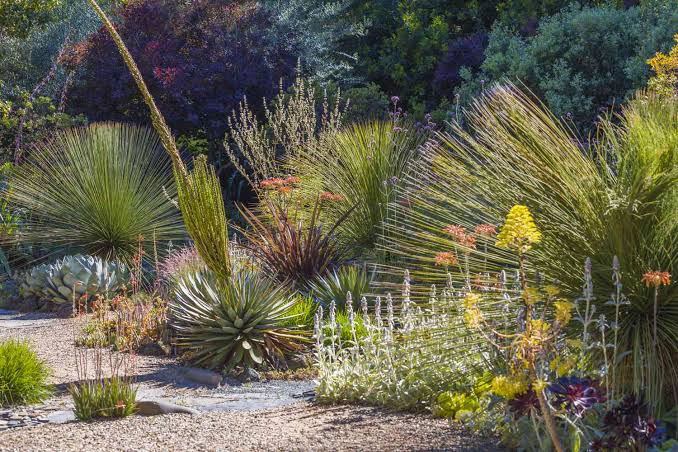
One of the biggest misconceptions about drought tolerance is that new plants can immediately survive without water.
Newly planted specimens need regular moisture while their roots establish.
During the establishment period:
- Water according to the plant’s requirements.
- Monitor soil moisture carefully.
- Avoid letting newly planted roots dry out completely.
- Gradually reduce irrigation as the root system develops.
- Continue monitoring during heat waves and prolonged drought.
Once established, many suitable species can tolerate longer periods between waterings.
How to Improve Soil for a Water-Wise Garden
Healthy soil can help plants use available moisture more effectively.
Before planting, consider:
- Improving poor soil with appropriate organic matter
- Removing compacted areas
- Improving drainage where necessary
- Testing soil if problems persist
- Matching plants to the existing soil rather than forcing unsuitable species to grow there
The right soil depends on the plant.
Succulents and many Mediterranean plants generally prefer excellent drainage, while some drought-tolerant perennials can tolerate more moisture.
Does Mulch Help Drought Tolerant Plants?
Yes, mulch can be extremely useful in a water-wise garden.
A suitable layer of mulch can reduce evaporation from the soil surface and help moderate soil temperatures.
Organic options include:
- Shredded leaves
- Wood chips
- Bark
- Compost
- Straw
Keep mulch away from direct contact with plant stems and tree trunks.
In some desert-style landscapes, gravel or rock mulch may also be used, depending on the plants and local conditions.
How to Water Drought Tolerant Plants
Even drought-tolerant plants need water.
The key is to provide appropriate moisture while they establish and then reduce unnecessary irrigation once they are established.
Deep watering can encourage roots to explore a larger area of soil.
Avoid frequent shallow watering unless the particular plant requires it.
During extreme heat or prolonged drought, even established drought-tolerant plants may show stress and require supplemental water.
Signs of Water Stress
Drought-tolerant plants are not immune to drought stress.
Possible signs include:
- Wilting
- Drooping leaves
- Leaf curling
- Brown or dry foliage
- Premature leaf drop
- Slow growth
- Flower loss
However, symptoms vary greatly between species.
Before watering, check the soil and consider recent weather conditions.
How to Choose Plants for Your USDA Hardiness Zone
Gardeners in the United States should consider their USDA hardiness zone when selecting perennial plants.
Hardiness information can help determine whether a plant is likely to survive winter temperatures in your area.
However, hardiness zone is only one part of plant selection.
Also consider:
- Summer heat
- Rainfall
- Humidity
- Soil type
- Sunlight
- Drainage
- Local pests
- Mature plant size
A drought-tolerant plant suited to Arizona may not be the best choice for a humid region with completely different growing conditions.
Native Drought Tolerant Plants
Native plants can be excellent choices for water-conscious landscapes because many are adapted to local environmental conditions.
However, “native” does not automatically mean drought tolerant.
Research the specific plant and its natural habitat before choosing it.
Local native-plant societies, botanical gardens, and university extension resources can be helpful when selecting regionally appropriate species.
Drought Tolerant Plants vs. Drought Resistant Plants
These terms are sometimes used interchangeably, but they can have slightly different meanings depending on the source.
A drought-tolerant plant is generally able to survive periods of limited water.
However, tolerance does not mean the plant will look perfect during severe drought.
Even hardy plants may reduce growth, drop leaves, or stop flowering when water becomes extremely limited.
Common Mistakes When Growing Drought Tolerant Plants
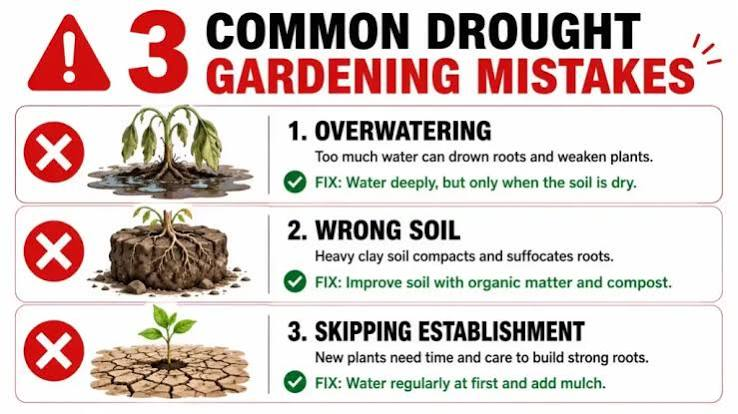
Watering Too Frequently
Plants adapted to dry conditions may struggle when their roots remain constantly wet.
Assuming New Plants Need No Water
Newly planted plants require regular moisture while establishing.
Ignoring Drainage
Poor drainage can be more harmful than drought for plants adapted to dry soil.
Choosing Plants Without Checking Local Conditions
Always consider your climate and growing zone.
Planting Everything in Full Sun
Some drought-tolerant plants can tolerate heat but still prefer partial shade in extremely hot environments.
Overcrowding the Garden
Give plants enough space for mature growth and airflow.
How to Create a Drought Tolerant Garden
A successful water-wise garden starts with planning.
Step 1: Observe Your Yard
Identify areas with full sun, partial shade, slopes, and poor drainage.
Step 2: Choose Suitable Plants
Select species that match your climate and soil.
Step 3: Group Plants by Water Needs
Place plants with similar requirements together.
Step 4: Improve Irrigation
Use drip irrigation or another efficient watering method where appropriate.
Step 5: Add Mulch
Reduce evaporation and protect the soil surface.
Step 6: Maintain the Garden
Remove weeds, monitor plants, and adjust watering during extreme weather.
Frequently Asked Questions About Drought Tolerant Plants
What are the best drought tolerant plants?
Lavender, rosemary, sedum, yarrow, coneflower, black-eyed Susan, Russian sage, agave, yucca, and several native plants can be excellent choices depending on your climate.
Do drought tolerant plants need water?
Yes. Newly planted specimens need regular water while they establish. Even mature plants may need supplemental irrigation during extreme drought.
What are the best drought tolerant plants for full sun?
Lavender, rosemary, yarrow, coneflower, sedum, blanket flower, California poppy, and Russian sage are popular choices for sunny landscapes.
Can drought tolerant plants grow in containers?
Yes. Sedum, lavender, rosemary, portulaca, aloe vera, and some smaller succulents can perform well in containers with excellent drainage.
Are succulents drought tolerant?
Many succulents are highly adapted to dry conditions because their leaves or stems can store water. However, they still require appropriate soil, sunlight, and occasional watering.
Are drought tolerant plants low maintenance?
Many can reduce watering and maintenance requirements once established, but they still need appropriate planting, pruning, pest monitoring, and occasional irrigation.
What is the best soil for drought tolerant plants?
The ideal soil depends on the plant. Many drought-tolerant species prefer well-drained soil, while some native perennials can grow in heavier soils.
Can drought tolerant plants survive a heat wave?
Many are better equipped to handle heat and dry conditions, but extreme heat can still cause stress. Newly planted specimens are particularly vulnerable.
Should I mulch a drought tolerant garden?
Yes. Appropriate mulch can reduce evaporation and help stabilize soil moisture.
Are native plants always drought tolerant?
No. Native plants are adapted to their local environments, but some naturally grow in wet habitats and therefore need more water.
Final Thoughts
Drought tolerant plants are a great option for creating a beautiful garden without needing to water it constantly. Once established, many of these plants can handle dry conditions and still add plenty of color and texture to your outdoor space.
The best results come from choosing plants that suit your climate, soil, and available sunlight. With the right selection and proper care, you can enjoy a healthy, attractive garden while using less water and spending less time on maintenance.