

Snake plants are known for being easy to care for, but watering them the right way is still important. One of the most common mistakes is giving them water too often, which can cause problems for their roots. Since snake plants can store water in their leaves, they usually don’t need frequent watering like many other houseplants.
So, how often should you water a snake plant? The answer can depend on things like the season, temperature, light, and the type of soil and pot you’re using. Instead of following a strict watering schedule, it’s better to check the soil and see what your plant actually needs.
In this guide, I’ll explain how often to water a snake plant and what signs to look for when it needs water. I’ll also share some simple watering tips to help you avoid overwatering and keep your snake plant healthy and growing well.
How Often to Water Snake Plant
There is no single watering schedule that works for every snake plant.
As a general starting point:
- Spring: About every 2–4 weeks
- Summer: About every 2–3 weeks, depending on conditions
- Fall: About every 3–5 weeks
- Winter: About every 4–6 weeks or less
These are only starting ranges.
The best answer to how often to water snake plant is to check the soil rather than relying entirely on a calendar. Knowing how often to water snake plant depends on its light, soil, pot size, temperature, and season.
If the soil is still damp several inches below the surface, wait before watering again.
If the soil is completely dry and the plant’s growing conditions are suitable, it may be time to water.
The Finger Test: An Easy Way to Check Soil
One of the simplest methods for beginners is the finger test.
Push your finger several inches into the soil.
If the soil feels moist, wait a few more days and check again.
If the soil feels dry several inches down, the plant may be ready for watering.
For larger pots, you can also use a wooden stick or moisture meter to check deeper areas.
The goal is not to keep the soil constantly moist. Snake plants generally prefer a cycle of thorough watering followed by a period of drying.
Look at the Leaves for Clues
Your snake plant’s leaves can provide useful clues about its condition.
Healthy Leaves
Healthy snake plant leaves are generally firm, upright, and relatively thick.
Possible Underwatering
A severely thirsty plant may develop leaves that appear thinner, curled, wrinkled, or less firm.
Possible Overwatering
Leaves that become soft, mushy, yellow, or unusually dark can be signs of excessive moisture or root problems.
However, leaf symptoms can have several causes, so always check the soil and roots before changing your watering routine.
Why Snake Plants Need Less Water
Snake plants, now commonly classified in the genus Dracaena, have adaptations that allow them to tolerate periods of dryness.
Their thick, succulent-like leaves store water.
Their underground rhizomes can also retain resources for future growth.
Because of these characteristics, keeping the soil constantly wet can cause more problems than allowing it to dry.
This is why understanding how often to water snake plant is largely about avoiding excessive moisture.
How Much Water Should You Give a Snake Plant?
When the soil is dry enough for watering, give the plant a thorough drink.
Pour water slowly over the soil until excess water begins to drain from the bottom of the container.
Allow the excess water to leave the drainage holes.
Then empty any water collected in the saucer.
Avoid giving only a few drops of water every time. Shallow watering can leave parts of the root system dry and may encourage uneven moisture.
A thorough watering followed by adequate drying is generally more appropriate for snake plants.
The Pot Makes a Big Difference
The container can significantly affect how often to water snake plant.
A small pot may dry faster than a large one.
A plastic container generally retains moisture longer than an unglazed terracotta pot.
A pot without drainage can hold excess water and increase the risk of root problems.
Always choose a container with drainage holes. The type of container can therefore change how often to water snake plant.
Terracotta Pots
Terracotta is porous and can allow moisture to evaporate more quickly.
This can be helpful for gardeners who tend to overwater.
Plastic Pots
Plastic containers generally retain moisture longer, so you may need to wait longer between waterings.
Decorative Containers
Some decorative pots do not have drainage holes.
If possible, use a nursery pot with drainage holes inside the decorative container.
Remove excess water rather than allowing the plant to sit in it.
Soil Affects Watering Frequency
The type of soil you use can completely change your watering routine.
Snake plants prefer a well-draining growing medium.
A dense soil that remains wet for a long time can create an unhealthy root environment.
A suitable cactus or succulent potting mix can be useful because it is generally designed to drain more efficiently.
You can also use an appropriate houseplant mix amended with materials that improve drainage.
The exact mix depends on your growing environment and container.
How Often to Water Snake Plant in Summer
Summer can increase the plant’s water requirements because warmer temperatures may cause soil to dry faster. Understanding how often to water snake plant in summer can help prevent both underwatering and overwatering.
However, do not automatically water every week just because it is summer.
Instead, check the soil.
A snake plant near a bright window in a warm room may dry faster than one sitting in a cool, low-light area.
Air conditioning can also affect indoor humidity and temperature.
During summer, inspect the soil regularly and water only when the plant actually needs it.
How Often to Water Snake Plant in Winter
Snake plants usually require less water during winter. Knowing how often to water snake plant during winter is important because indoor soil often dries more slowly.
Indoor temperatures may be cooler, daylight hours are shorter, and plant growth often slows.
As a result, the soil may remain wet for longer.
Many indoor snake plants can go several weeks between waterings during winter.
If your home is warm and the plant receives strong light, it may still need occasional watering.
Always check the soil before watering.
Does Light Affect Snake Plant Watering?
Yes.
Light influences how quickly a plant uses water.
A snake plant receiving bright indirect light may dry out faster than one kept in a darker location.
However, snake plants can tolerate relatively low-light indoor conditions, where their growth may be slower.
If your plant is in low light, be especially careful not to overwater it.
Low light plus constantly wet soil can create an unfavorable environment for the roots.
How Humidity Affects Watering
Indoor humidity can also influence how quickly soil loses moisture.
In a dry home, especially during winter heating, soil may dry somewhat faster.
In a humid environment, moisture may remain in the pot longer.
You do not usually need to mist snake plant leaves.
Instead, focus on proper soil moisture, good drainage, and adequate airflow.
Signs You Are Overwatering a Snake Plant
Overwatering is one of the most common problems with snake plants.
Possible warning signs include:
- Yellowing leaves
- Soft leaves
- Mushy leaf bases
- Dark or brown areas
- Unpleasant smell from the soil
- Soil that remains wet for a long time
- Root rot
If the soil remains saturated for an extended period, inspect the plant carefully.
Remove it from the pot if necessary and examine the roots.
Healthy roots should generally be firm rather than mushy.
Signs Your Snake Plant Needs More Water
Although snake plants tolerate drought, severe underwatering can eventually cause stress.
Possible signs include:
- Wrinkled leaves
- Curling leaves
- Drooping or bending
- Dry soil throughout the pot
- Leaves becoming less firm
- Brown, dry leaf edges
One symptom alone does not always prove that the plant needs water.
Check the soil first.
What to Do If You Overwatered Your Snake Plant
If you accidentally watered too frequently, stop watering and allow the soil to dry.
Check whether the pot has drainage holes.
If the soil remains wet for a very long time, you may need to repot the plant into a more suitable, well-draining mix.
If roots are soft or damaged, remove unhealthy portions with clean tools before repotting.
After repotting, allow the plant to settle before returning to a normal watering routine.
The goal is to correct the growing environment rather than simply reducing the amount of water.
What to Do If Your Snake Plant Is Extremely Dry
If the soil has become completely dry and the leaves are showing clear signs of dehydration, water the plant thoroughly.
Allow excess water to drain away.
Do not leave the container sitting in water.
Afterward, return to a more consistent routine based on soil moisture.
Avoid immediately watering again the next day unless there is a specific reason.
How Often to Water Snake Plant After Repotting
A newly repotted snake plant may need a slightly different routine.
Repotting can disturb the root system, and the new soil may retain moisture differently from the old mix.
Do not automatically water repeatedly after repotting.
Follow the moisture requirements of the new soil and allow appropriate drying between waterings.
If roots were damaged during repotting, avoiding excessive moisture becomes especially important.
Watering Snake Plants in Different Rooms
The location of your plant can change its watering needs.
Bedroom
A snake plant in a bedroom with moderate light may use water relatively slowly.
Bathroom
A humid bathroom may keep soil moist longer, although adequate light and airflow are still necessary.
Living Room
A bright living room near a window may provide more light and warmth, potentially increasing water use.
Office
Air conditioning or heating can affect humidity and temperature, so check the soil regularly.
Best Time of Day to Water a Snake Plant
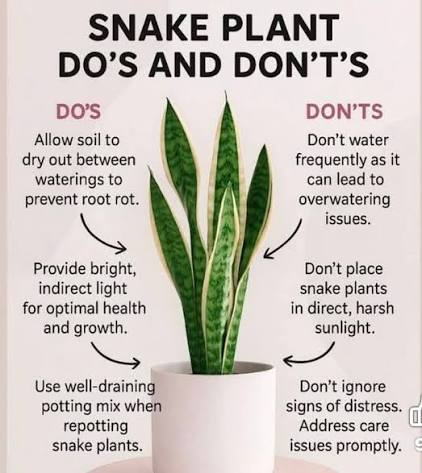
There is no strict time of day that must be followed for indoor snake plants.
Water when the plant actually needs it.
Morning can be convenient because you can observe the plant throughout the day and allow excess moisture to drain.
The most important factor is not the clock. It is avoiding unnecessary watering.
Should You Mist a Snake Plant?
Misting is generally unnecessary.
Snake plants are adapted to relatively dry conditions and do not require constantly humid leaves.
Instead of misting, focus on:
- Well-draining soil
- Proper drainage
- Appropriate light
- Good airflow
- Correct watering frequency
If humidity is extremely low, address the overall indoor environment rather than relying on frequent leaf misting.
Tap Water and Snake Plants
Many snake plants can tolerate ordinary tap water, but water quality varies by location.
If your tap water contains high levels of minerals or salts, you may notice white deposits on the soil or changes in plant health over time.
If you suspect water quality is causing problems, filtered or other suitable water sources may be worth considering.
Allowing excess water to drain through the pot can also help prevent buildup.
A Simple Snake Plant Watering Routine
If you want a simple routine, use this process:
Step 1: Check the soil several inches down.
Step 2: If it is still moist, wait.
Step 3: If it is dry, prepare to water.
Step 4: Water thoroughly until excess water drains from the bottom.
Step 5: Empty the saucer.
Step 6: Wait until the soil dries sufficiently before watering again.
This routine is much more reliable than watering every Sunday or every two weeks regardless of conditions.
Common Watering Mistakes to Avoid

Watering on a Fixed Schedule
A calendar cannot account for changes in temperature, light, pot size, or soil.
Giving Tiny Amounts Frequently
Small amounts can create inconsistent moisture in the pot.
Using a Pot Without Drainage
This is one of the easiest ways to create waterlogged soil.
Watering Wet Soil
Always check before watering.
Ignoring Seasonal Changes
Indoor plants can use water differently in summer and winter.
Leaving Water in the Saucer
Standing water can keep the soil wetter than necessary.
How Often to Water Snake Plant in Different Conditions
| Growing Condition | General Approach |
|---|---|
| Bright indirect light | Check soil more frequently |
| Low light | Allow soil to dry thoroughly |
| Summer heat | Check moisture regularly |
| Winter | Water less frequently |
| Small terracotta pot | May dry faster |
| Large plastic pot | May stay moist longer |
| Humid room | Check soil before watering |
| Dry heated room | Monitor soil more often |
| Well-draining soil | May require more frequent checks |
| Dense wet soil | Improve drainage before increasing watering |
Remember that these are guidelines rather than strict schedules.
Frequently Asked Questions About How Often to Water Snake Plant
How often should I water a snake plant?
Many indoor snake plants can be watered every 2 to 6 weeks, but the exact frequency depends on light, temperature, pot size, soil, humidity, and season. Always check the soil first.
Should snake plant soil dry out completely?
The soil should be allowed to dry substantially between waterings. However, the plant should not be left severely dehydrated for extremely long periods.
Can you overwater a snake plant?
Yes. Overwatering is one of the most common problems because constantly wet soil can damage roots and contribute to root rot.
How do I know when my snake plant needs water?
Check the soil several inches below the surface. If it is dry and the plant is otherwise healthy, it may be time to water.
Should I water a snake plant from the top or bottom?
Either method can work, but thorough watering from the top until excess water drains away is simple and effective. Always empty standing water from the saucer.
How often should I water a snake plant in winter?
Many indoor snake plants need significantly less water in winter, sometimes every 4 to 6 weeks or longer. Check the soil instead of following a fixed schedule.
Why are my snake plant leaves turning yellow?
Yellow leaves can be caused by overwatering, poor drainage, root problems, natural aging, or other environmental issues. Check the soil before changing your watering routine.
Can snake plants live without water for a month?
Healthy, established snake plants can often tolerate a month without watering, particularly in cooler or lower-light conditions. However, the exact tolerance varies by plant and environment.
Do snake plants like humidity?
Snake plants can tolerate normal indoor humidity and generally do not require high humidity. Good drainage is usually more important than increasing humidity.
Can I mist my snake plant?
You generally do not need to mist snake plants. Frequent misting does not replace proper watering and may create unnecessarily wet leaf surfaces.
Do snake plants need drainage holes?
Yes. A container with drainage holes is strongly recommended because it allows excess water to escape.
Final Thoughts
Snake plants are known for being easy to care for, but watering them the right way is still important. One of the most common mistakes is giving them water too often, which can cause problems for their roots. Since snake plants can store water in their leaves, they usually don’t need frequent watering like many other houseplants.
So, how often should you water a snake plant? The answer can depend on things like the season, temperature, light, and the type of soil and pot you’re using. Instead of following a strict watering schedule, it’s better to check the soil and see what your plant actually needs.
In this guide, I’ll explain how often to water a snake plant and what signs to look for when it needs water. I’ll also share some simple watering tips to help you avoid overwatering and keep your snake plant healthy and growing well.