

Growing tomatoes from seedlings is a great way to get a healthy start to your garden and enjoy fresh tomatoes later in the season. Whether you’re growing them indoors first or buying young seedlings from a garden center, giving them the right care from the beginning can make a big difference. Proper light, watering, soil, and temperature all help tomato seedlings grow strong and healthy.
Tomato seedlings may look small and delicate at first, but they can grow quickly when they have the right conditions. In this guide, we’ll explain how to grow tomato seedlings step by step, including how much sunlight and water they need, when to transplant them, and how to help them become strong plants ready for the garden.
How to Grow Tomato Seedlings From Seed
The easiest way to learn how to grow tomato seedlings is to follow the process in stages.
If you are learning how to grow tomato seedlings, starting with healthy seeds and the right growing conditions will give your plants a strong beginning.
You will need:
- Tomato seeds
- Seed-starting trays or small containers
- Seed-starting mix
- A spray bottle or gentle watering method
- Plant labels
- A sunny window or grow light
- A warm location
- Small pots for transplanting
Choose tomato varieties based on your climate, available garden space, and personal preference.
Determinate varieties are often useful for gardeners who want more compact plants, while indeterminate varieties can continue growing and producing throughout the season when properly supported.
1. Choose Quality Tomato Seeds
Start with fresh, reputable tomato seeds.
There are many varieties available, including:
- Cherry tomatoes
- Roma tomatoes
- Beefsteak tomatoes
- Heirloom tomatoes
- Paste tomatoes
- Slicing tomatoes
- Compact patio varieties
For gardeners in the United States, consider your local growing season when choosing a variety.
If your summers are short, an early-maturing variety may be more practical.
If you live in a long growing season, you may have more options.
2. Start Tomato Seeds at the Right Time
Timing is one of the most important parts of growing healthy seedlings.
Tomato plants are warm-season crops and are sensitive to frost.
A common approach is to start seeds indoors about 6 to 8 weeks before the average last spring frost date in your area.
The exact timing varies across the United States.
Gardeners in warmer southern states may start earlier or have longer outdoor growing seasons, while gardeners in northern states may need to wait longer before transplanting outside.
Use your local frost date as a planning guide.
3. Use the Right Growing Mix
Avoid using heavy garden soil for starting tomato seeds indoors.
Garden soil can be too dense and may not provide the drainage and texture young seedlings need.
Instead, use a quality seed-starting or propagation mix designed for germinating seeds.
A good growing medium should:
- Hold enough moisture
- Drain excess water
- Allow air around the roots
- Be fine enough for small roots
- Be relatively free of weed seeds
Moisture is important, but the mix should not remain saturated.
4. Choose Containers With Drainage
Tomato seeds can be started in seed trays, cell packs, small nursery pots, or other clean containers.
The container should have drainage holes.
Without drainage, excess water can collect around young roots and increase the risk of damping-off and other problems.
If you reuse containers, clean them thoroughly before planting.
5. Plant Tomato Seeds at the Correct Depth
Tomato seeds are relatively small and should not be planted too deeply.
A common guideline is to cover them with approximately 1/4 inch of growing mix.
Place one or more seeds in each cell depending on the container and then gently cover them.
Avoid compacting the soil too tightly.
6. Keep the Soil Moist
After planting, moisten the growing mix gently.
A spray bottle can help prevent seeds from being displaced, although bottom watering can also work well.
The goal is to keep the mix evenly moist without creating soggy conditions.
Check the containers regularly because small cells can dry out quickly.
7. Provide Warmth for Germination
Tomato seeds generally germinate best in warm conditions.
A temperature around 70–80°F (21–27°C) is commonly suitable for tomato seed germination.
A warm indoor location can often provide adequate conditions.
Once seedlings emerge, light becomes especially important.
Avoid placing seed trays directly against a cold window at night if temperatures drop significantly.
8. Give Tomato Seedlings Plenty of Light
Insufficient light is one of the most common reasons young tomato plants become tall and weak.
Once seedlings emerge, they need strong light.
A sunny window can work if it provides enough direct or bright light, but many indoor gardeners use grow lights for more consistent results.
If using artificial lighting, position the lights appropriately above the plants and follow the manufacturer’s recommendations.
Rotate seedlings occasionally if natural light is coming strongly from one direction.
9. Avoid Overwatering Young Seedlings
Young tomato seedlings have small root systems and do not need constantly wet soil.
Overwatering can lead to weak roots and disease problems.
Check the growing medium before watering.
If the surface is beginning to dry, provide enough moisture to rehydrate the root zone without leaving the containers waterlogged.
Good drainage is essential.
10. Thin Crowded Seedlings
If several tomato seeds germinate in the same container, the seedlings may compete for light, water, nutrients, and root space.
Once the seedlings are established, keep the strongest plant and remove weaker extras.
Avoid pulling seedlings aggressively because this can disturb the roots of the plant you want to keep.
Use clean scissors to cut unwanted seedlings at soil level if necessary.
11. Transplant Tomato Seedlings Into Larger Pots
As seedlings grow, their roots eventually need more room.
If roots begin filling the original container or the seedlings become too large for their cells, move them into larger pots.
A larger container gives the roots more room to develop.
When transplanting:
- Prepare the new container.
- Fill it with suitable potting mix.
- Carefully remove the seedling.
- Place it into the new pot.
- Firm the mix gently around the roots.
- Water lightly.
- Return it to strong light.
Tomatoes have an unusual ability to develop roots along portions of their buried stems, so they can often be transplanted somewhat deeper than many other seedlings.
12. Feed Tomato Seedlings Carefully
Tomato seedlings initially receive nutrients from the seed and growing medium.
As they grow, they may eventually benefit from a diluted, balanced fertilizer or a fertilizer formulated for young plants.
Avoid excessive fertilizer.
Too much fertilizer can damage young roots and may produce excessive leafy growth.
Follow the product label when using a commercial fertilizer.
13. Keep Air Moving Around Seedlings
Good airflow can help reduce overly humid, stagnant conditions.
A small fan can provide gentle air movement in an indoor seed-starting area.
Do not aim strong airflow directly at delicate seedlings.
Gentle circulation is enough.
Air movement can also encourage stronger stems as the plants develop.
14. Harden Off Tomato Seedlings
One of the most important steps before moving tomatoes outdoors is hardening off.
Indoor-grown seedlings are not immediately prepared for direct outdoor sunlight, wind, and changing temperatures.
Begin by placing the seedlings outdoors for a short period in a sheltered location.
Gradually increase outdoor exposure over approximately 7 to 14 days.
Start with mild conditions and avoid intense midday sun at first.
Over time, expose the plants to more sunlight and outdoor conditions.
Do not leave tender seedlings outside overnight until temperatures are consistently suitable for tomatoes.
15. Transplant Tomato Seedlings Into the Garden
Tomatoes should be planted outdoors only after the danger of frost has passed and soil temperatures are appropriate for warm-season growth.
Choose a location with plenty of sunlight.
Most tomatoes perform best with around 6–8 hours of direct sunlight per day.
Before planting, improve the garden bed if needed and make sure the soil drains well.
Space plants according to the mature size and recommendations for the specific variety.
How to Grow Tomato Seedlings in Containers
You do not need a large backyard to grow tomatoes.
Compact tomato varieties can perform well in containers. How to grow tomato seedlings in containers is especially useful for gardeners with balconies, patios, or limited garden space.
Choose a container large enough for the mature plant and make sure it has drainage holes.
Patio or dwarf varieties can be particularly convenient for balconies, decks, and small gardens.
Remember that container-grown tomatoes usually require more frequent attention to watering than plants growing in the ground.
How to Grow Tomato Seedlings Under Grow Lights
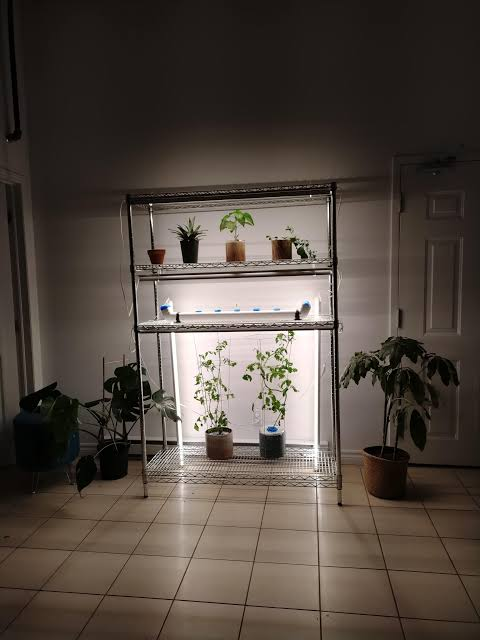
Grow lights are useful when natural sunlight is limited.
Knowing how to grow tomato seedlings under grow lights can help gardeners produce strong plants when natural sunlight is limited. Position the light close enough to provide strong illumination without overheating the seedlings.
Keep the lighting schedule consistent.
If seedlings become very tall and thin, inadequate light is one of the first things to investigate.
Strong, compact growth is generally a better sign than rapid upward stretching.
Signs of Healthy Tomato Seedlings
Healthy seedlings generally have:
- Strong stems
- Green leaves
- Compact growth
- New leaves developing regularly
- Healthy roots
- No obvious disease symptoms
Seedlings do not need to become extremely large indoors before transplanting.
A compact, sturdy plant can often adapt better than a very tall, weak seedling. These characteristics are important when learning how to grow tomato seedlings for a successful growing season.
Why Tomato Seedlings Become Tall and Leggy
Leggy seedlings usually develop when they do not receive enough light.
The plant stretches toward the available light source.
Other possible factors include:
- Light positioned too far away
- Crowded seedlings
- Excessive warmth
- Poor airflow
- Inconsistent care
Move the plants closer to an appropriate light source and provide stronger illumination.
Why Tomato Seedlings Turn Yellow
Yellow leaves can have several causes.
Possible reasons include:
- Overwatering
- Poor drainage
- Nutrient deficiency
- Root problems
- Insufficient light
- Natural aging of lower leaves
Check the soil moisture, container drainage, and lighting before adding fertilizer.
Do not assume yellow leaves automatically mean the plant needs more nutrients. Proper lighting is one of the most important parts of how to grow tomato seedlings indoors.
Tomato Seedlings Falling Over
If young tomato plants suddenly collapse at the soil line, damping-off may be involved.
This problem is more likely under overly wet, poorly ventilated conditions.
To reduce the risk:
- Avoid overwatering
- Use clean containers
- Provide good airflow
- Use a suitable seed-starting medium
- Give seedlings sufficient light
- Avoid overcrowding
Remove severely affected seedlings to prevent problems from spreading.
When Should Tomato Seedlings Go Outside?
Tomato seedlings should generally be moved outdoors after the risk of frost has passed.
However, the exact timing varies significantly across the United States.
Check your local average last frost date and current weather forecast.
The plants should also be hardened off before permanent outdoor planting.
Never rely solely on the calendar if unexpected cold weather is forecast.
Knowing when to move plants outdoors is another important part of learning how to grow tomato seedlings successfully.
How to Grow Tomato Seedlings for a Bigger Harvest
Healthy seedlings provide a strong foundation for the growing season, but future harvest size also depends on variety, sunlight, soil fertility, spacing, watering, temperature, pollination, and pest management.
To give seedlings a good start:
- Choose a suitable variety
- Provide strong light
- Avoid overwatering
- Transplant when roots need more space
- Harden plants gradually
- Choose a sunny outdoor location
- Provide appropriate support after transplanting
Good seedling care does not guarantee a specific harvest, but it gives plants a better foundation for productive growth.
A Simple Tomato Seedling Timeline
Here is an easy general timeline for beginners:
Week 1
Plant seeds in moist seed-starting mix and keep them warm.
Week 2
Seedlings should begin emerging under suitable conditions. Provide strong light immediately.
Weeks 3–4
Monitor moisture, light, and airflow. Thin crowded seedlings if needed.
Weeks 5–6
Transplant larger seedlings into bigger containers if roots need more space.
Weeks 6–8
Continue providing strong light and appropriate moisture.
Before Outdoor Planting
Begin hardening off gradually.
After Frost Risk Passes
Transplant healthy seedlings into the garden or permanent containers.
Your exact timeline may be shorter or longer depending on variety and growing conditions.
Common Mistakes When Growing Tomato Seedlings
Starting Seeds Too Early
Very early seedlings can become oversized before outdoor conditions are suitable.
Giving Too Little Light
Weak light produces stretched, fragile plants.
Overwatering
Constantly wet soil can create serious root problems.
Using Garden Soil Indoors
Heavy garden soil may drain poorly in small containers.
Skipping Hardening Off
Suddenly moving indoor seedlings into full outdoor conditions can cause severe stress.
Ignoring Drainage
Containers without drainage holes can quickly become waterlogged.
Overfertilizing
Young plants do not need excessive fertilizer.
Planting Outdoors Too Soon
Tomatoes are warm-season plants and can be damaged by cold temperatures and frost.
Frequently Asked Questions About How to Grow Tomato Seedlings
How long does it take tomato seeds to germinate?
Under suitable warm conditions, tomato seeds can often germinate within several days to around two weeks. Temperature, seed age, moisture, and variety can affect the timing.
How deep should tomato seeds be planted?
A common guideline is around 1/4 inch deep.
How much light do tomato seedlings need?
Young tomato seedlings need strong light to prevent weak, stretched growth. A sunny window may work, but grow lights can provide more consistent illumination.
When should I start tomato seeds indoors?
Many gardeners start tomato seeds about 6 to 8 weeks before their area’s average last spring frost date.
Should tomato seedlings be watered every day?
Not necessarily. Check the growing medium and water when it begins to dry rather than following a strict daily schedule.
Why are my tomato seedlings so tall and thin?
Insufficient light is one of the most common causes of leggy tomato seedlings. Move them toward a stronger light source or use a suitable grow light.
When can tomato seedlings be transplanted outside?
Wait until frost danger has passed, temperatures are suitable, and the seedlings have been properly hardened off.
Should I fertilize tomato seedlings?
They may eventually benefit from a diluted fertilizer, especially after the initial nutrients in the seed-starting mix are depleted. Follow the fertilizer label and avoid overfeeding.
Can I grow tomato seedlings on a windowsill?
Yes, provided the window offers enough strong light and the temperature is suitable. If seedlings become tall and thin, supplemental lighting may be necessary.
How big should tomato seedlings be before transplanting?
There is no single required height. Healthy seedlings with several true leaves and a developing root system can often be transplanted when outdoor conditions are suitable.
Final Thoughts
Growing tomato seedlings is not difficult when you give them the right care from the start. Make sure they get plenty of light, regular but careful watering, and a warm growing environment. As the seedlings become stronger, gradually prepare them for outdoor conditions before moving them into the garden.
With a little patience and consistent care, small tomato seedlings can grow into healthy plants that produce plenty of fresh tomatoes. Starting them properly gives your plants a much better chance of growing strong throughout the season.